Dos and Don’ts When Feeding Solids
With so much misinformation around feeding babies, here are some dos and don'ts so you can start off on the right foot and support a positive eating experience. We're Registered Dietitians and moms--you'll learn practical tips and suggestions we wish every parent knew when starting starting.
This post may contain affiliate links.
Bite-Sized Takeaways
🥄 Support self-feeding. Let your baby actively participate by holding a spoon and exploring food.
😊 Embrace the mess. Messy eating is a normal and important part of starting solids!
🧠 Practice responsive feeding. Follow your baby's hunger and fullness cues instead of overly praising them to eat.
🐶 Keep pets away when first starting solids. Let them help with cleanup once your baby is finished.
❤️ Enjoy meals together. Model eating with your baby. This creates a relaxed and positive mealtime environment.
SUMMARIZE AND SAVE THIS CONTENT ON:
Don't you hate those negative social media posts that just harp on your parenting and tell you what you're doing wrong?!
Posts like… this one. About how not to feed your baby.
Okay, we made that one (cue blushing emoji).
Social media is a wild world where you only have a few seconds to grab someone's attention and provide a micro-amount of education. So sometimes a "what not to do" style post fits that space.
But understanding the whole picture is super important, and that's what our blog and e-courses are for. All the full why, how, what, when, where of feeding, with actual room to explain it!
Here's how this one works. This post is written in a "call and response" style where we call out something we recommend against, but then respond with an alternate solution.
Without further ado, here are the "dos" and "don'ts" of feeding your baby solid food!
Jump to:
- Bite-Sized Takeaways
- Don't wipe your baby's mouth after every bite
- Do put a barrier (such as petroleum jelly) on a baby with sensitive skin to prevent contact reactions
- Don't swipe upwards when spoonfeeding
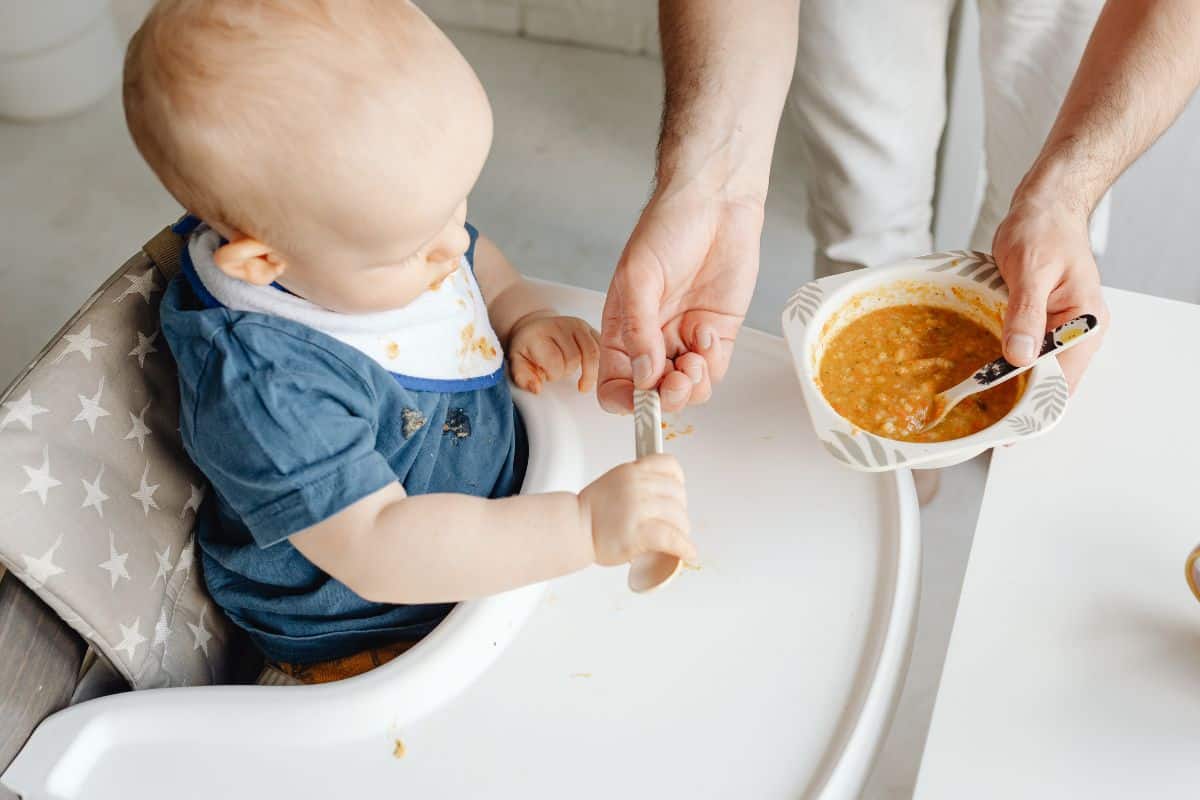
- Do allow baby to hold the spoon
- Don't let pets hang out around the high chair
- Do allow pets to clean up afterwards
- Don't praise too much
- Do eat with your baby and enjoy each other's company
- Other recommended infant nutrition articles
Don't wipe your baby's mouth after every bite
It's tempting to wipe your baby's face after every bite in an effort to stay ahead of the mess.
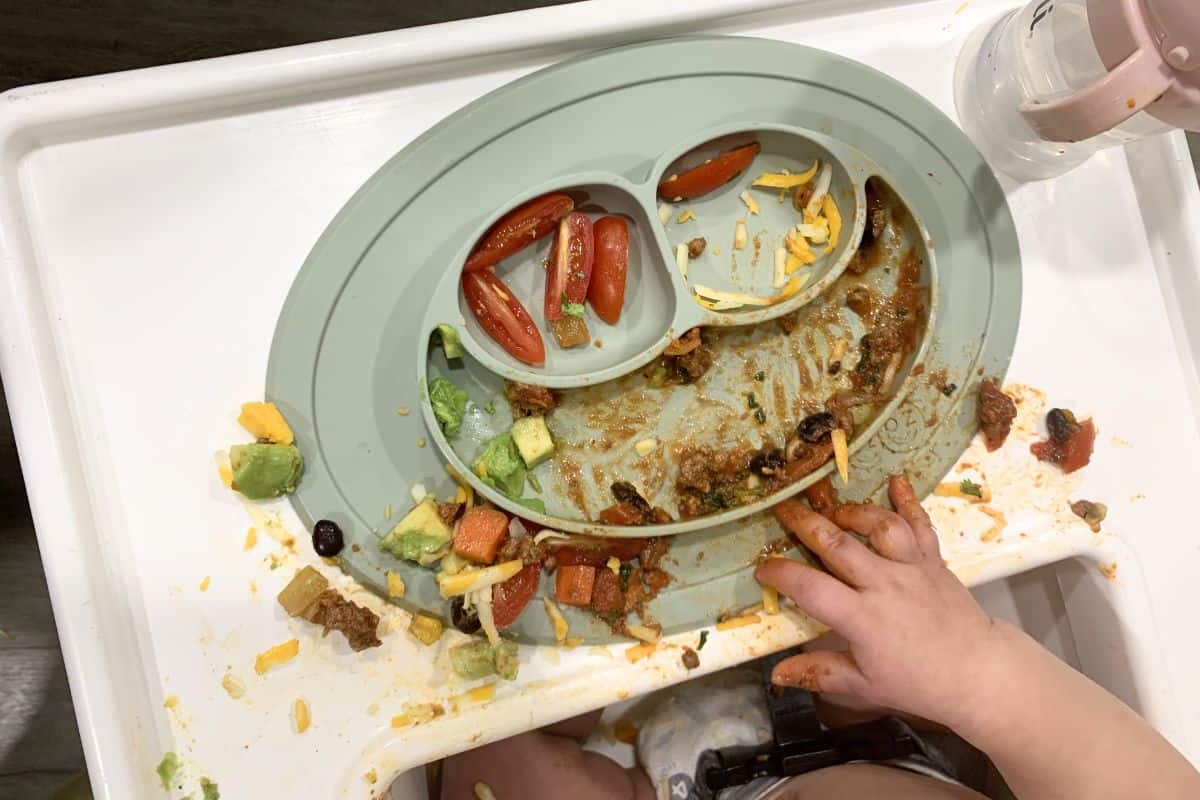
But when it comes to starting solids, mess isn't just inevitable - it's actually helpful. The more opportunities your baby has to explore their food, the more they learn from it.
Poking, touching, smelling, squishing, smearing, and tasting all provide valuable sensory information about the foods they're eating. That sensory input is part of the learning process that actually helps prevent picky eating down the road!
While it doesn't initially appear to be connected, texture plays a huge role in food acceptance! By allowing your baby's brain to "learn" about different textures and touch sensations, you're helping to keep their food preferences wider.
One mindset shift that can help is to think of the mess less as something to clean up and more as something that supports your baby's learning.
So allow your baby to get messy throughout the meal and save clean up for the end. In fact, you can even let your baby engage in hands-on food play to essentially help with all of this!
And let's be honest - most babies love getting messy with their food. The more fun, curiosity, and joy we can bring to mealtimes from the start, the better.
Do put a barrier (such as petroleum jelly) on a baby with sensitive skin to prevent contact reactions
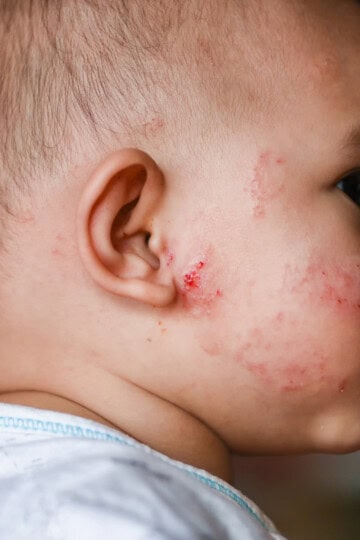
If your baby has more sensitive skin, putting a barrier cream on their mouth, neck, and hands prior to eating can help prevent contact reactions, such as redness. This strategy is particularly helpful when more acidic foods like citrus or tomatoes are offered.
However, if you have a baby who is dealing with eczema we've put together an evidenced based approach to managing your baby's eczema symptoms around feeding, including what nutrients to focus on to optimize skin health. Don't miss it!
Don't swipe upwards when spoonfeeding
When spoonfeeding your baby it may seem logical to swipe upwards when removing the spoon from your baby's mouth. It seems like a great way to "scrape" the food so that it stays inside the mouth. However, this can bump the roof of your baby's mouth, resulting in an uncomfortable and negative experience around eating.
Instead, think 'horizontal!'
Focus on inserting and removing the spoon from your baby's mouth along a horizontal plane. This will be more comfortable and allow your baby to practice natural spoon eating. Go ahead- get a spoon and see what happens when you feed yourself! Did you notice how your lips close around the spoon to prevent dribbling? That's the skill we want babies to learn too!
Do allow baby to hold the spoon
To be clear, we're not against spoon feeding. For many babies and families, it's a wonderful way to build trust at mealtimes. The key is using it in a way that supports responsive feeding, rather than overriding your baby's cues.
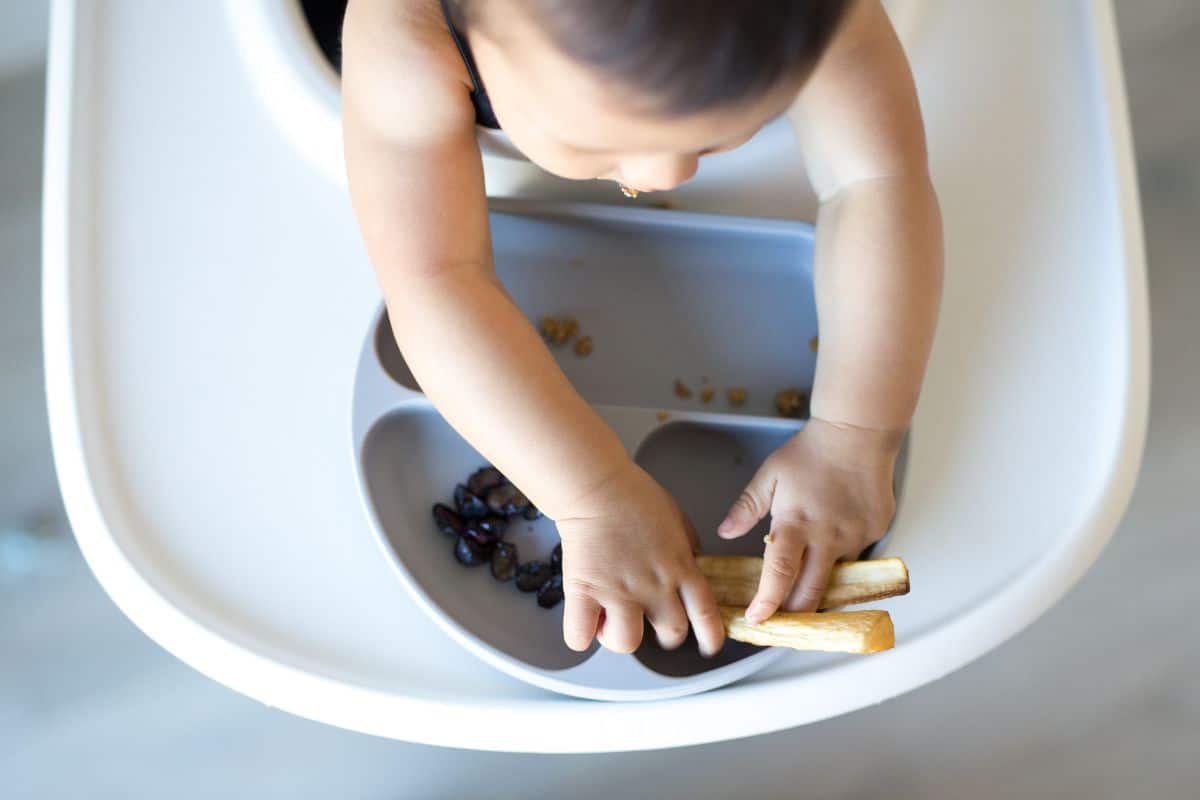
If your baby wants to hold the spoon, go for it! Just expect plenty of spoon dropping…and maybe even food throwing along the way, which we can also help with.
When feeding our own babies, we liked to keep two spoons in rotation - one for baby to hold and explore, and one that's loaded and ready for the next bite. As one spoon hit the floor, the other stepped in. It was a bit like a mealtime dance!
Believe it or not, the spoon you choose for your baby can make a big difference. That's why we've rounded up our favorite dietitian-approved feeding gear for starting solids.
For a deeper dive into spoon feeding versus baby-led weaning, be sure to check out our article.
Don't let pets hang out around the high chair
When babies are learning to eat, they have a lot to focus on. They're working on sitting steadily, picking up food, bringing it to their mouth, chewing, swallowing, and repeating the process over and over. Since these skills are brand new (and come with a safety risk!), mealtimes require a lot of concentration!
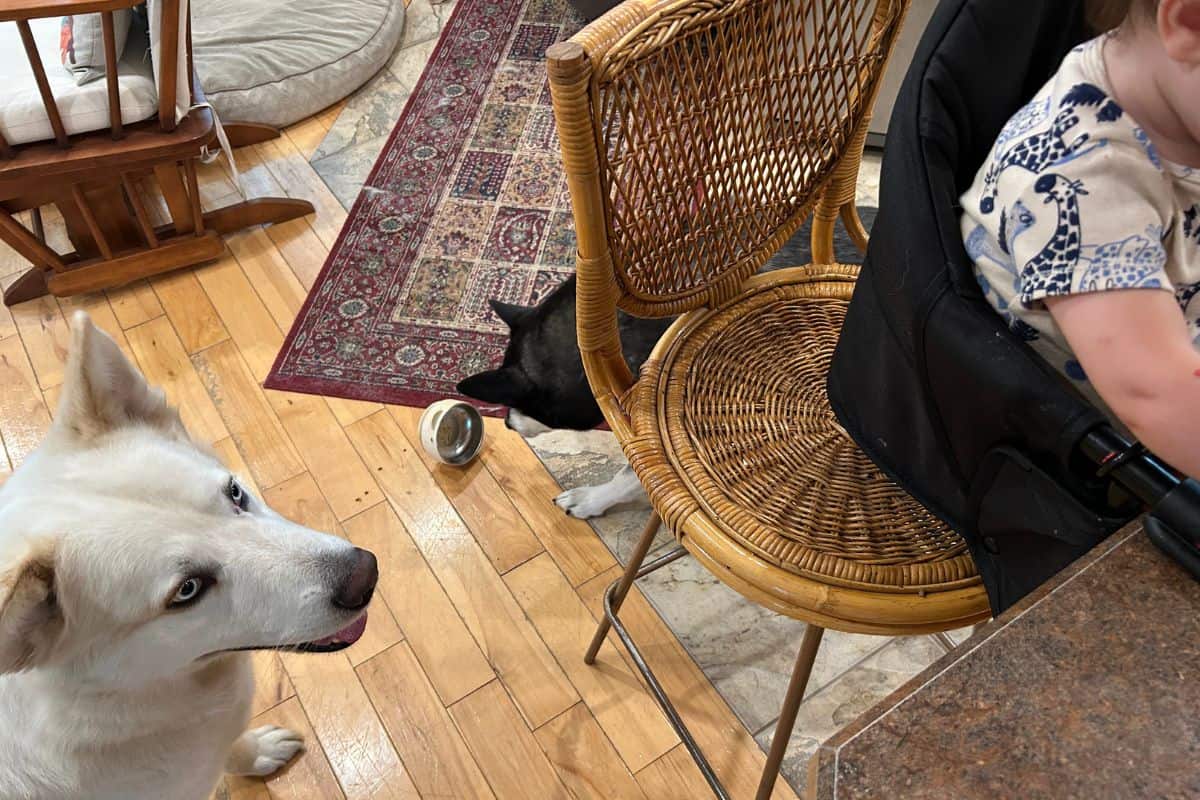
That's why we recommend keeping pets away from the high chair during meals. While it may seem harmless, a pet waiting for dropped food can easily pull your baby's attention away from eating. To add, a sudden bark could startle your baby and create the perfect recipe for a choking incident. Creating a calm, distraction-free mealtime environment helps your little one stay focused on practicing the skills they need to become a confident eater and prevent the things you want, like extreme gagging and even choking.
Do allow pets to clean up afterwards
As we mentioned above, starting solids can get messy, and we're here for it. When babies are free to touch, squish, drop, and explore their food, they're building skills and confidence around eating.
While we recommend keeping pets away from the high chair during meals to minimize distractions, once your baby is finished, feel free to invite them back in to help deal with all that mess.
Don't praise too much
When your baby learns something new, it's only natural to want to cheer them on - we get it, you're excited!
When it comes to feeding, though, less praise is often better. Too much praise can feel like pressure, and pressure is one of the biggest things we want to avoid at mealtimes.
This is a topic we're passionate about because even well-meaning pressure can affect a child's relationship with food. If you'd like to learn more, our e-course Feeding Toddlers Confidently goes into depth about how pressure can unintentionally show up at mealtimes and what to do instead (plus other ways to prevent picky eating).
Do eat with your baby and enjoy each other's company
Instead of turning your excitement into praise, turn it into building connection. Focus on making mealtimes feel warm, relaxed, and enjoyable for both of you.
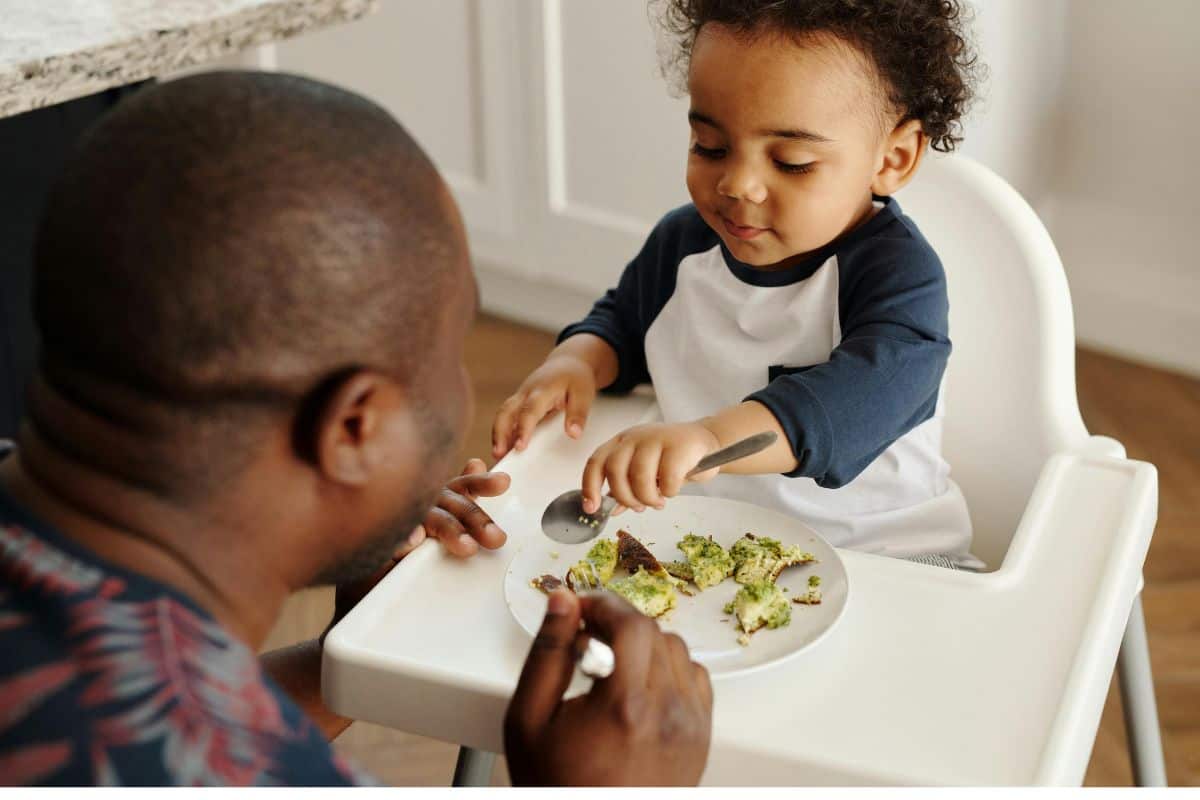
It doesn't have to be anything fancy. Sharing a meal, eating the same (or similar) foods, and having fun together can have a bigger impact on your feeding journey than you might think, all while helping your baby build a positive relationship with food. Your baby is learning SO much from you, simply by watching you eat.
Starting solids is an exciting milestone, but it can also feel overwhelming. The good news? Our Start Solids Confidently e-course (a Canadian top seller!) was made to support parents through this important milestone-we sift through all the dos and don't so you don't have to. You'll find practical, evidence-based guidance, videos, meal ideas, and expert answers to the questions parents ask most.
Whether you're spoon-feeding, exploring baby-led weaning, or using a combination of both, the way you approach mealtimes matters just as much as the foods you offer. Practicing responsive feeding, giving your baby opportunities to explore, and creating a relaxed mealtime environment can go a long way in supporting a healthy relationship with food.
Wherever you are on your starting solids journey, we're here to help you feel confident every step-and every bite-of the way.