What to do when your baby just isn't into solids
Not every baby loves solids right away. Learn nine practical tips to help your cautious baby build confidence with food and make mealtimes less stressful for you both.
This post may contain affiliate links.
Bite-Sized Takeaways
🧘 Stay calm: staying relaxed can help mealtime feel safe and positive.
🥄 Follow your baby's preference. Some babies prefer finger food, while others feel more comfortable with spoon-feeding.
🪑 Proper high-chair support can help your baby feel secure and make exploring food easier
👀 Eating together allows your baby to observe and learn how food is explored, chewed and eaten
🌱 Touching, smelling, tasting or bringing food to their mouth are all steps toward becoming more comfortable with solids
SUMMARIZE AND SAVE THIS CONTENT ON:
Have you ever noticed when it comes to starting solids the internet is full of videos of babies LOVING it. In fact, if you relied solely on social media you'd think every baby that starts solids eats anything and everything they're offered with excitement and a sense of adventure.
But…in reality there is a full spectrum of responses and temperaments babies bring to this milestone of starting solids. This means there will be babies who adore eating from day one, babies who seem to want nothing to do with this thing called food, and everything in between. As dietitians and moms we've seen babies all along this spectrum (including in our own houses!) and we firmly believe all these responses can be normal.
You may have heard that a baby's temperament can affect everything from sleep to separation, but did you know it can also heavily influence how a baby takes to starting solids? It's true! A variety of 'temperament traits' including activity level, distractability, and adaptability play into how your baby will take to starting solids.
In our blog post How to Feed Your Baby According to Their Personality we dive into seven temperament traits and discuss strategies to optimally feed your baby based on their individual temperament.
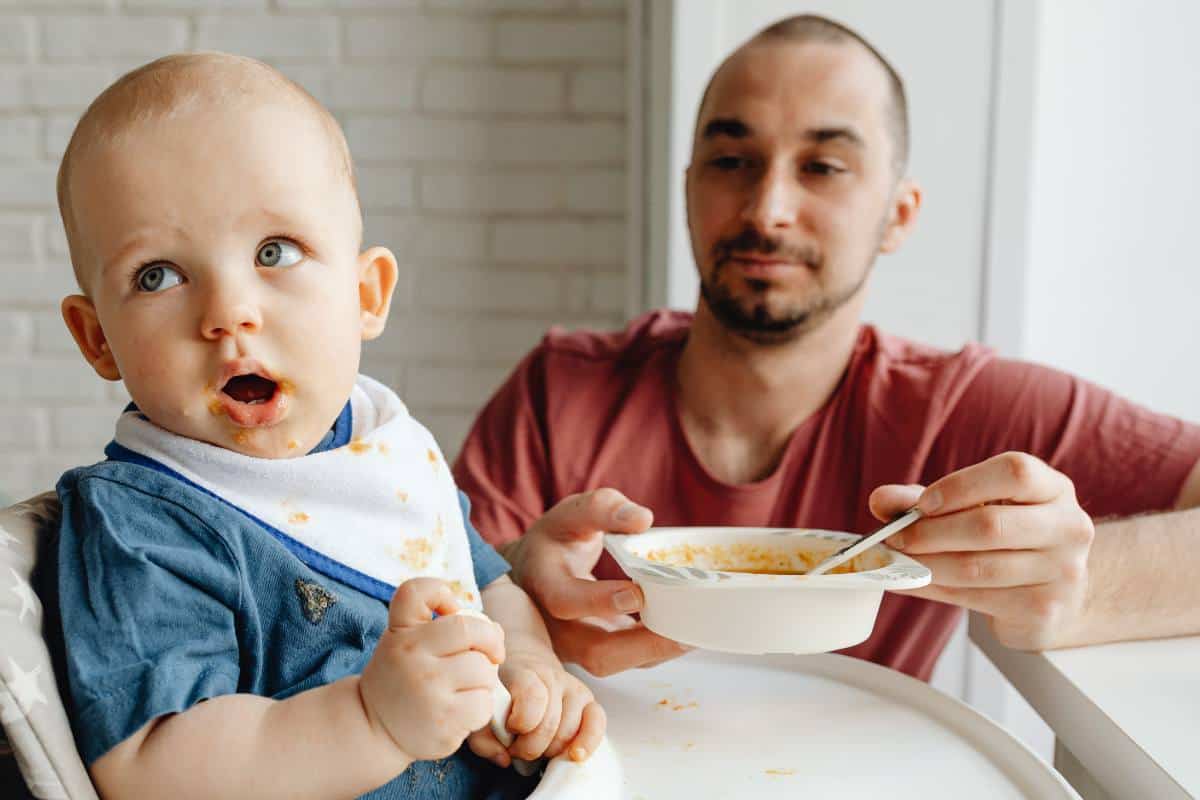
Today, we're focusing on babies with a specific personality trait that we call our 'uber cautious' little ones. These are the babies who take to solids at a painfully slow snail's pace! If you are a parent of an uber cautious little one, we see you. It can be exhausting and anxiety-provoking to prepare, serve, and clean up meal after meal when your baby eats little to nothing. And you might be worried about your baby becoming a picky eater and wanting to do everything you can to prevent that from happening!
That's where we come in.
We've outlined nine tips you can put to use to build comfort and confidence within your uber cautious little one through your journey of starting solids. Our hope is to educate and empower you with tried and true strategies to support both you and your child.
And, if you've just ventured into the wonderful world of feeding--get familiar with our trusted recommendations for what to do and what not to do when starting solids.
9 Tips for Supporting Your Uber Cautious Baby with Starting Solids
Jump to:
- Bite-Sized Takeaways
- 9 Tips for Supporting Your Uber Cautious Baby with Starting Solids
- 1. Project a calming presence
- 2. Remain completely hands off
- 3. If you've been spoon feeding, offer finger foods
- 4. If you've been offering finger foods, try spoon feeding
- 5. Review your baby's high chair ergonomics
- 6. Eat with your baby
- 7. Offer your baby teethers
- 8. Nail down the timing of nursing/bottle sessions
- 9. Seek the help of a feeding therapist
- Starting solids is a journey
1. Project a calming presence
Babies pick up on so much more than we are aware of. While they definitely have their own innate responses to what is going on around them, they also look to their caregivers for how they should judge any given situation (particularly new ones).
If you as the caregiver are anxious about offering your baby a new food, they're going to pick up on that. However the cool thing is, the opposite can be true too! If you are relaxed, confident, and calm when offering your baby food, they will sense and absorb this positive energy.
We know this can be easier said than done. We also know one of the best ways to ease anxiety and build confidence around starting solids is knowledge. Knowledge is POWER! That is why we are so passionate about educating parents of all things feeding babies and kids.
If you're ready to rid yourself of anxiety and boost your confidence when it comes to feeding, then Start Solids Confidently was made for you.
2. Remain completely hands off
This one might sound a little surprising, but it can make all the difference. Some babies absolutely love having your full attention at mealtimes-they eat best when you're right there, fully engaged, cheering on every bite. Others? They prefer a little breathing room. For them, too much attention can feel like pressure. It really comes down to your baby's personality
Now, don't get us wrong-"hands off" doesn't mean ignoring your baby or stepping out of the room (big safety no-no!). What it does mean is simply dialing it back a notch. Instead of hovering, try giving them a little room. Rather than jumping in at every food interaction, focus on your own plate and keep the eye contact casual.
Not eating at the same time? No problem-tackle a quick kitchen task while still keeping a discreet eye on them.
The goal is simple: create space for your baby to explore while you stay close by.
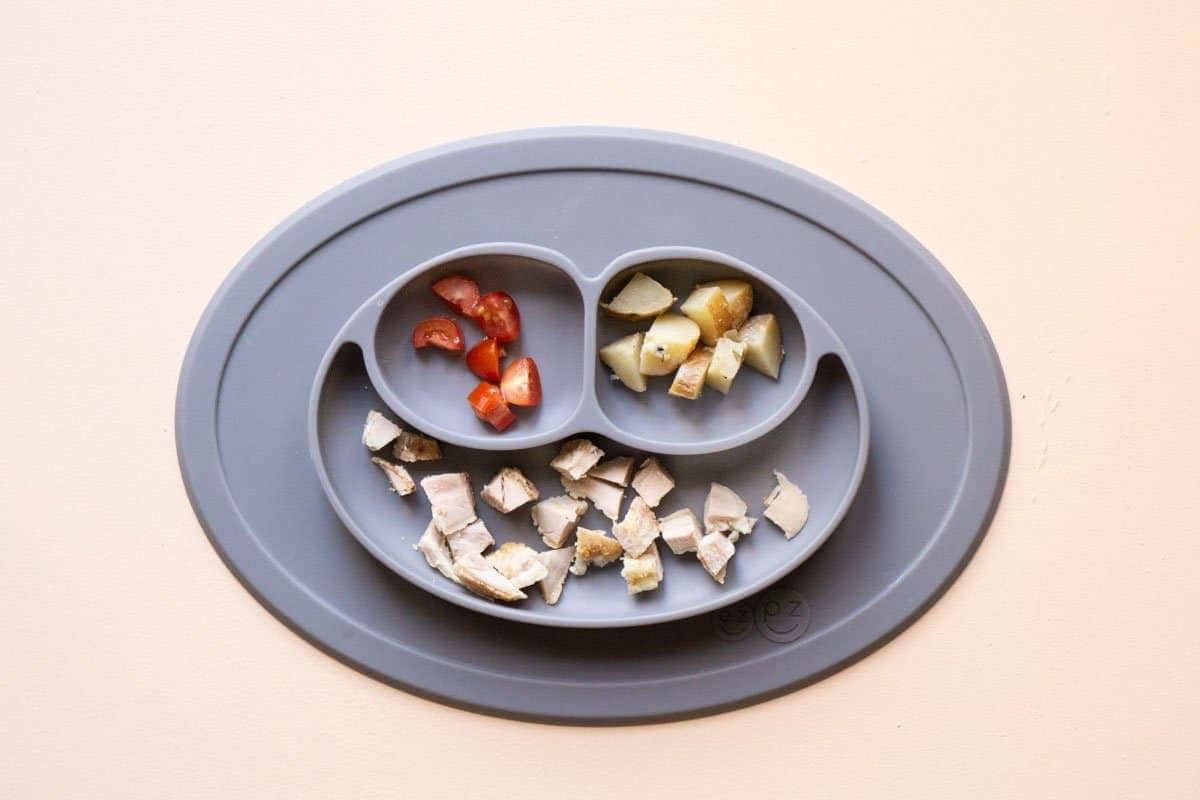
3. If you've been spoon feeding, offer finger foods
We've got a bit of a theme going on here: what works for one baby may not work for another. There are some babies who thrive with spoonfeeding when starting solids. The physical hands-on support from their caregiver during the feeding process is a key to success for them.
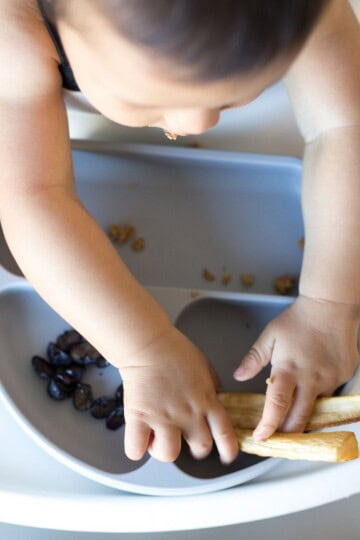
On the other hand, there are babies who prefer to 'do it myself!' and thrive when they can feel things out for themselves. For these babies, offering developmentally appropriate finger foods they can explore and eat on their own might be just what they need!
This being said, we know finger foods (aka baby led weaning) can cause some parents to feel scared or worried, particularly about choking. We get it. That's why we created our free ebook "Top 5 Feeding Fears and How to Overcome Them". It covers the fears we hear most often from parents starting solids (including choking!) AND how to overcome them.
Here's a few finger foods you can try to get started, these recipes are all soft, squish and great for babies:
- Fruit pouch pancakes
- Tender spiced sumac beef--you'll need a slow cooker for this!
- Italian veggie filled meatballs
4. If you've been offering finger foods, try spoon feeding
This one is the opposite of the previous strategy - if you've been offering finger foods because you're excited about baby led weaning… but your baby is just not having it, try spoon feeding. As we mentioned above, some babies do better with a more hands on approach when it comes to starting solids.
Now, we know there are some voices out there telling parents Baby Led Weaning (aka finger foods) is the best and only way to feed your baby.
But guess what? As Registered Dietitians we are here to tell you there is NOTHING wrong with starting with spoon feeding. In fact, it might be exactly what they need to build a sense of comfort and safety around food and actually eat it. It might be exactly what YOU need to remain anxious.
Need some recipe inspiration when it comes to offer wholesome purees? Here's a few you'll want to bookmark:
- Baby's first banana custard
- Authentic Indian daal (a yummy lentil soup recipe)
- Creamy edamame puree
- Black bean dip which doubles as an amazing quesadilla
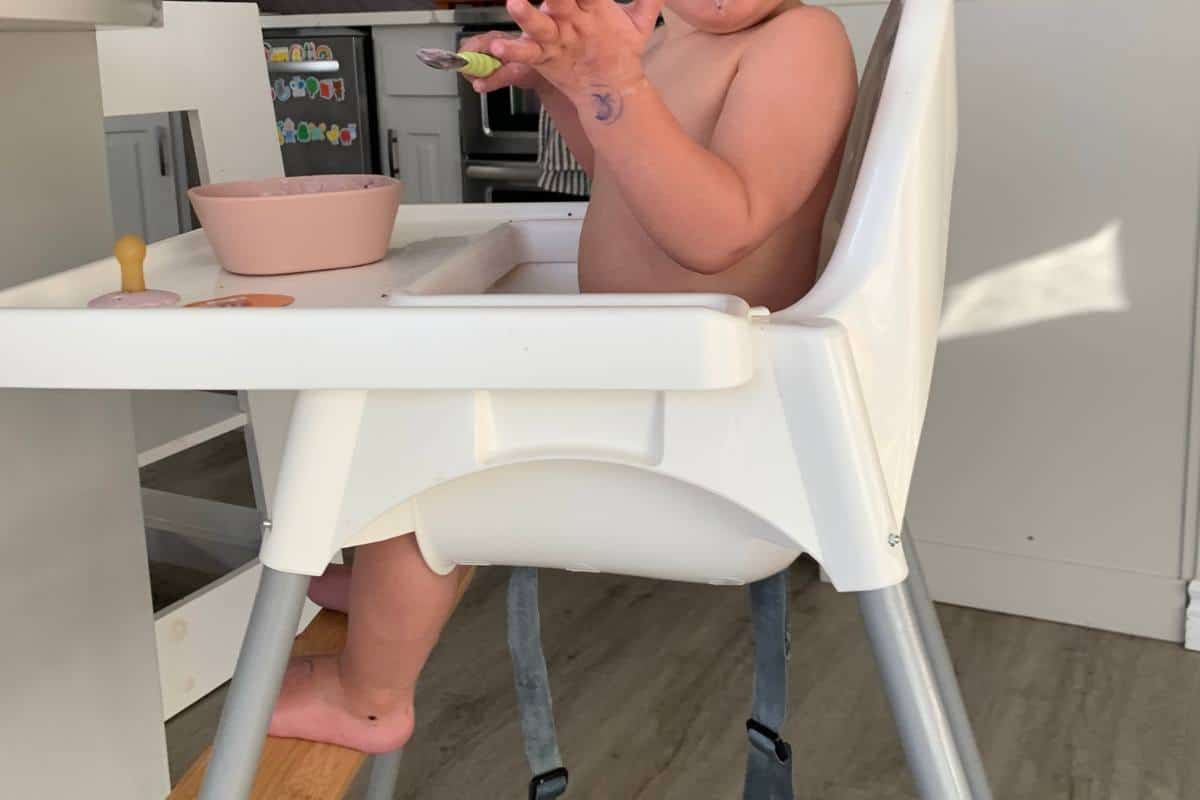
5. Review your baby's high chair ergonomics
Ever sat on a tall bar stool with nowhere to rest your feet? Your legs just dangle, and staying balanced feels tricky. Or think about sinking into one of those oversized coffee shop chairs-you're so low and far from the table that eating feels awkward and clumsy.
That's exactly how it can feel for babies in the wrong high chair. If their legs are dangling, or they're leaning way back or off to the side, chances are:
-
- they won't want to stay in the chair for long,
-
- focusing on learning to eat will be tough, and
-
- they'll tire out fast from all the extra effort of just sitting upright.
This is why high chair ergonomics matter. A supportive, comfy chair sets your baby up for success-helping them feel secure so they can put their energy where it belongs: exploring food and learning to eat.
Here are a few highchairs we love:
-
- Ikea Antilop (with an after market foot rest)
6. Eat with your baby
In our opinion, eating with your baby is one of (if not THE) most underrated strategy when it comes to starting solids. Babies learn so much from watching us! Social cues, talking, clapping, and walking are all skills babies learn from observing those around them.
Eating is no exception.
Everything from smelling food, to picking it up, to putting it in their mouths, to chewing, and swallowing are all 'skills' babies can learn from seeing a caregiver do it. By watching you, they'll not only learn how to do these basic actions, but they'll also feel safe doing them - because they see someone they love and trust doing them too.
We know it's not always possible to eat every meal with your baby, but we recommend doing it as often as you can, without adding stress or pressure. Mealtimes should feel enjoyable for both of you. If you're able to eat together at every meal, that's wonderful. If it's just once a day, that's great too - make the most of the time you do have together.
Lastly, don't be afraid to really exaggerate the actions you're doing while eating with your baby. You can even chew your own food with big exaggerated motions when eating with your baby in an effort to help them really get the idea.
You can hear the mom in this video helping the baby learn how to chew!
7. Offer your baby teethers
There are ways to help your baby get comfortable with starting solids even when you're not at the table - and that's where teethers come in! We recommend offering teethers even before starting solids, as they help babies explore and get familiar with the inside of their mouths. Think of it as them 'mapping their oral geography' - a fancy way of saying they're learning where everything is in there. Believe it or not, babies aren't born knowing this, and building that awareness can make them feel more confident when it's time to start eating.
PRO TIP: learn about food teethers inside Start Solids Confidently!

8. Nail down the timing of nursing/bottle sessions
Have you ever wished babies came with a set schedule for feeding, sleeping, and nursing or bottle feeding? If so, you're not alone - many parents feel the same way. That's why we created a free resource with a variety of flexible schedules to help guide you as you start solids. While no single schedule works perfectly for every baby or family, many parents find it helpful to have a starting point. We offer several options to fit your baby's needs and your family's unique rhythm.
And that's where this strategy comes - playing with the timing of feeding. If you're always offering meals to your baby at the same time interval after nursing/bottle session and your baby just isn't into it, try switching up that interval.
9. Seek the help of a feeding therapist
Sometimes all it takes is employing one of these strategies and it starts to click for your baby..
But in some cases, there are babies who will need extra support to be successful in their feeding journeys. With this in mind, here are some signs it may be time to get more help from your family doctor or a feeding therapist:
-
- If at nine months of age your baby has little to no interest in solids
-
- If your baby is struggling with texture progression (i.e. they're only eating purées at nine months of age)
-
- If your baby is unable to sit unsupported in a high chair at 8-9 months of age
-
- If your newborn baby struggled with latching and is now having a hard time with solids
-
- If your seven month+ baby spits everything out
-
- If you simply feel that something isn't quite right!
There may be a physical or functional factor making it tricky for your baby to eat solids, it never hurts to connect with a feeding therapist.
No matter the result of the assessment, the overall outcome will be positive in the long run. If there is an abnormality of some kind (such as a tongue tie), the feeding therapist will work with you to address it. If there isn't, your mind will be put at ease and you will be able to move forward on your feeding journey with confidence. A win both ways!
If you're unsure how to connect with a feeding therapist, get in contact with your family doctor or a pediatric feeding therapist in your area.
Starting solids is a journey
We often say that starting solids is a journey-one that you and your baby take together. No two journeys look the same: some move quickly, others take more time. There will be ups, downs, and plenty of progress along the way. As dietitians and moms, our biggest advice-especially if your baby is very cautious-is to celebrate the small wins. Even if your baby just touches food or brings it to their mouth without actually eating it, that's a victory. It shows they're becoming more comfortable and safe around food, which is an important step forward on their feeding journey.
If you're looking for more support, knowledge, and confidence in starting solids with your baby, our eCourse Start Solids Confidently is here for you. It covers everything from signs of readiness, choking safety, and high chair ergonomics, to texture progression, baby-led weaning, spoon feeding, meal plans, and more. It's a complete guide to help you feel prepared and confident. We'd be honored to support you on your feeding journey. Take the first step today!
Happy feeding!
P.S. Here are some more helpful reads for you and your little one!