Canada’s Front-of-Package Nutrition Labels Explained for Parents
This post was written as a paid collaboration with the Canadian Sugar Institute. As always, all opinions are our own.
Spoiler: a front-of-package label doesn't automatically mean a food is off-limits. Canada's Front-of-Package nutrition symbol is a helpful tool, but like most things in nutrition, context matters. Here's what two dietitian moms want you to know before your next grocery run.

Bite-Sized Takeaways
🔍 The label flags foods high in sugar, sodium, or saturated fat
📊 "High" usually means 15% or more of the Daily Value per serving
🛒 Not every packaged food will have one
⚖️ A FOP label is not a pass/fail grade. Context matters!
🔎 Use the FOP label as a starting point, then flip to the Nutrition Facts for the full picture
SUMMARIZE AND SAVE THIS CONTENT ON:
Feeding a family today often means relying on some packaged foods. Between busy schedules, grocery budgets, convenience needs, and the reality of parenting young children, many families (including us Dietitian moms) are leaning into foods that come in boxes, bags, tubs, or cartons! This is honestly just the reality.
At the same time, most parents (including us!) want to feel confident about what they're buying and how to make sense of nutrition information in the grocery aisle.
But have you ever just stood in the grocery aisle and wondered, "what do all these labels tell me"? While it may initially be confusing, Canada has introduced a new Front-of-Package (FOP) nutrition label as of January 1, 2026. And the goal is that it will help you feed your family according to nutrition goals you might have in mind.
Our approach at Happy Healthy Eaters is always rooted in balance, not fear. No single food makes or breaks a healthy pattern of eating, and labels are just one piece of the puzzle.
We've actually shared tips to help you shop for your family in the past without the stress and suggestions to save money when it come to grocery prices. This time we're breaking down what the new Front-of-Package sugar symbol means, how it differs from the Nutrition Facts table, and how parents can use both tools in a practical, low-stress way when feeding their families.
Jump to:
What foods need to show a FOP label?
First of all, unlike the Nutrition Facts, which is required on most packaged food, the Front-of-Package (FOP) nutrition symbol is only required when prepackaged foods and beverages in Canada meet or exceed pre-determined thresholds for:
- Sugars
- Sodium
- And/or saturated fat
These are the nutrients of particular concern because excess amounts of any or all of them are linked to an increased risk of developing certain chronic diseases .
In simple terms, if a packaged product is considered high in one or more of these nutrients, it will need to display the symbol on the front of the package.
For most foods, "high" means the product contains 15% or more of the Daily Value (%DV) for sugars, sodium, or saturated fat per serving. Some categories have different cut-offs:
- 10% DV for foods with smaller serving sizes (such as salad dressings, condiments, or pickles)
- 30% DV for larger prepackaged main dishes (such as frozen pizza, frozen lasagna, or other complete meals)
This system is meant to help shoppers quickly identify foods that contain higher amounts of nutrients many Canadians are encouraged to limit more often (sugars, sodium and saturated fat).
What does it look like?
Believe it or not, this new label has been ten years in the making! Health Canada consulted with consumers and took inspiration from similar labels in other countries such as Chile, Argentina, Mexico, and several more.
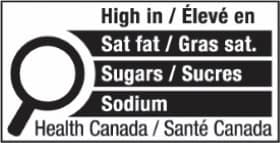
The black and white label features a magnifying glass and says "high in____ (fill in the blank with the target nutrient).
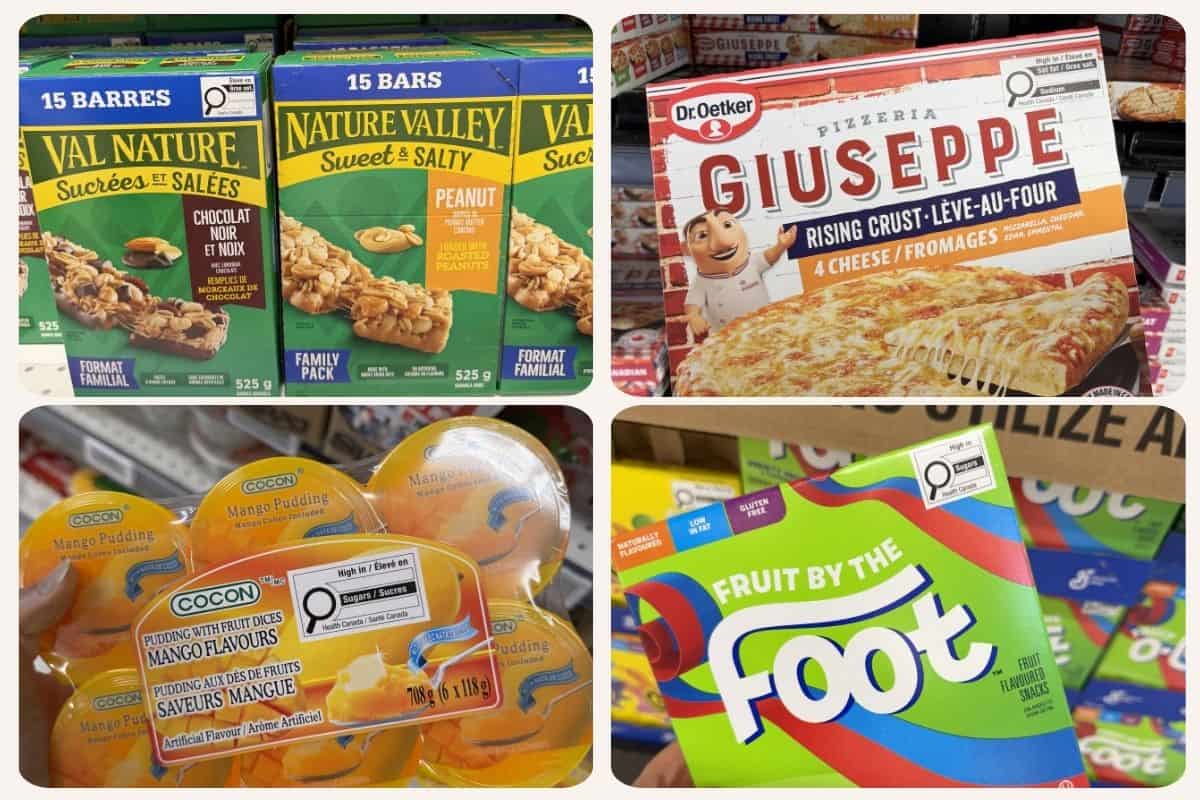
You'll typically spot the label in the top half portion of a product. On packages that are wider than they are tall, it will appear on the right-hand side of the label in both official languages, French and English.
And here's what they look like on a few products:
How does the FOP label differ from the Nutrition Facts table?
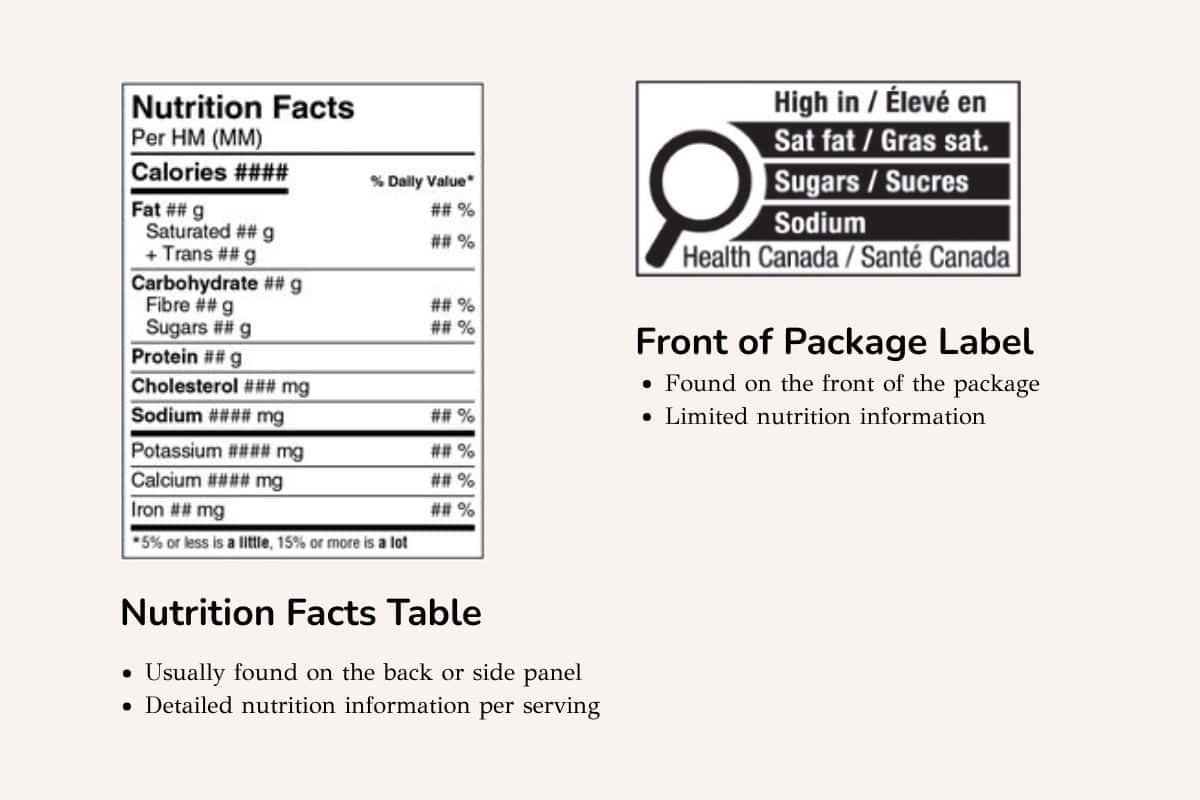
Since the FOP label only calls out foods high in saturated fat, sugars, and sodium, it's just a sneak peek into the product's nutrition. And many foods won't even need to have them!
The nutrition facts table is required to be on the majority of packaged foods and provides a fuller picture into the product's nutritional value. It's required to show the calories, fat, protein, carbohydrates, and certain vitamins and minerals per serving size, as well as the percent daily value.
The two can work together. If you see a FOP label, this might prompt you to take a closer look at the nutrition facts table for further analysis.
What foods are exempted from the FOP label?
There are several instances during which a FOP label may not be required. Here are a few noteworthy exemptions:
- Ingredients that are obvious sources of sugar, salt, or saturated fat that are typically used in cooking or food preparation rather than consumed on their own: e.g. table sugar, syrups, salt, and cooking oils/fats.
- Products with small surface areas: wrapped bite-sized candies, gums, mints, etc.
- Raw, single ingredient meat or poultry products - whether whole or ground - and raw, single ingredient fish or seafood
- Whole fruits naturally contain sugar but have a protective effect on health. But if the food is modified, like when fruit is turned into juice, it would need to carry a label if it exceeds the sugars threshold.
- For prepackaged main dishes with a reference amount ≥ 170 g (when intended solely for children age one to four years) or ≥ 200 g (when intended for children and/or adults), the symbol must appear when the amount of saturated fat, sugars and/or sodium is ≥ 30% of the applicable DV.
Do I need to avoid foods that have an FOP label?
Unlike the FOP label, the decision about what foods to buy for our kids is not always black and white. Cheesy, but true! There's a lot of nuance to nutrition.
Here are some decisions to help guide your choices when you come across a package with a front-of-package symbol.
How often does my child eat this food?
There's a big difference between a food that's only eaten sparingly in the context of a well balanced nourishing diet and a food that's consumed regularly. For example, if you send a granola bar in your child's lunchbox everyday, you may want to look for a lower sugar option. But if you're buying them as an occasional item, you might be okay with a higher sugar bar.
Are there key nutrients in this food?
Kefir is a fermented milk beverage of Eastern European origin. It's high in calcium, vitamin B12, and promotes gut health. But it has a strong sour taste so Jessica's kids won't drink the plain version. They do, however, ADORE the sugar sweetened flavoured versions! Since they're getting a lot of nutrition along with the added sugar which you can clearly see on the nutrition label, this is still a product she will buy for them sometimes.
Contrast this to sugar-sweetened pop. Both have FOP labels for sugar, but sugar is literally the only nutrient found in pop. There's a big difference between drinking sugar-sweetened kefir and pop.
What else is my child eating alongside this food?
Does this food help my child accept other foods? Sometimes a dip (like ketchup) can be a helpful tool that allows a child to be successful with eating foods they haven't learned to enjoy on their own yet.
Does my child have any health conditions?
For a child living with diabetes or other conditions that would need careful sugars management, these FOP labels can be a quick way to sort through several options.
Is my child selective in their food choices?
From sensory challenges to unresolved tongue ties to emotional aversions, there are a variety of reasons why kids might have a narrow range of foods they accept and be a bit more on the picky eating side of things. For these kids a sugary cereal they accept that's fortified with iron might be what they need to meet their nutrient needs if they're not yet successful with foods naturally high in iron such as meat. But remember, there's actually a lot of things you can do to help your fussy eater, and that's where dietitians can support you.
As you can see, context matters a great deal when it comes to purchasing food! There are so many variables that go into play from price, accessibility, taste, acceptance, and more. The FOP label is best used as a screening and comparison tool, not seen as a pass/fail grade.
Parents-we're all trying our best and our hope is that this helps you make the choices that work for your family.