What’s Actually Safe to Feed Our Kids? A real talk on grocery shopping anxiety
Dietitians share how to make grocery shopping a fast, painless (& maybe even fun?) experience!
This post may contain affiliate links
This post was written as a paid collaboration with CropLife Canada. As always, all opinions are our own.
Summer's winding down and the back-to-school chaos is here! Some say being busy is a badge of honour… others are all about the #slowlife. Honestly? We can't keep up either. But one thing's for sure: unless you're a dietitian like us who loves reading labels for fun, you probably just want grocery shopping to be fast and painless.
That's why we've rounded up our top seven tips to simplify your shop and lighten your mental load!
1. Prioritize whole foods when possible
Between work, school, activities, and everything else on your plate, it's no surprise that many of us lean into processed or packaged foods to support our nutrition-and that's okay. Processed foods can play a role in keeping busy families fed and fueled. Seriously, we both love to spend time in the kitchen, but we have little motivation to make homemade crackers, ketchup, and fruit leather a regular habit.
Nonetheless, when possible, try to make space for whole foods like fruits, vegetables, whole grains, dairy, eggs, and lean proteins. Some other items like bagged salads, pre-cut veggies or canned beans are minimally processed but help speed things along for busy parents. These foods give kids (and us!) the nutrients they need to grow, and they tend to keep them fuller for longer.
A common question that comes up alongside this topic is whether to choose organic or conventional produce.
The truth?
Both are safe and nourishing options. Nutritionally, there isn't much difference between the two. In Canada, all foods-whether grown conventionally or organically-are held to strict safety standards. The best choice is the one that fits your budget, your family's preferences, and what's available to you.
Think of whole foods as the foundation, and processed foods as the helpers that make everyday life a little easier. Both can fit together in your approach to feeding your family.
Suggested reading: Should I Buy Organic Food?
2. Look beyond the stickers
Picture this: Jess is walking down the cracker aisle, phone in hand, moving at a pretty brisk pace. By the time she hit the end, the video had already racked up 21 seconds. Twenty-one seconds of nothing but crackers. And that was just one aisle-there were even more waiting in the specialty section!
When shelves are bursting with this many options, food companies know they need to grab your attention somehow. Enter: the shiny little stickers on the front of packages.
These little labels are designed to grab your attention fast. They play into whatever health concern is in the spotlight, so your brain can take the easy way out: see the sticker, assume it's the "better" option, and move on. And since you're making this kind of decision over and over again while shopping, it's easy to see why those shortcuts are tempting.
But here's the thing-we don't have to fall for them. Let's take a closer look at a couple of the most common ones.
Non-GMO (the butterfly label)
Here's a fun fact: there are only six GMO crops grown in Canada. That's it! These include: canola, corn, potatoes, soybeans, sugar beets and alfalfa. Apples have also been approved for production in Canada but are not yet being commercially grown. Eight others are grown in other parts of the world - cotton, eggplant, papaya, pink pineapple, purple tomato, rice, sugarcane and squash. And before any of them are approved, they go through extensive safety testing. That's why it's a bit funny to see the non-GMO label on foods like carrots or wheat pasta. There aren't even GMO versions of those foods. In those cases, the label isn't really giving you helpful information-it's just there to make the package look more appealing.
GMOs have been evaluated by Health Canada and international governments and scientists for over 30 years. The scientific consensus is clear: GM foods pose no more risk to human health than non-GM foods. Globally, there have been trillions of meals consumed containing GMOs without any evidence of negative health impacts.
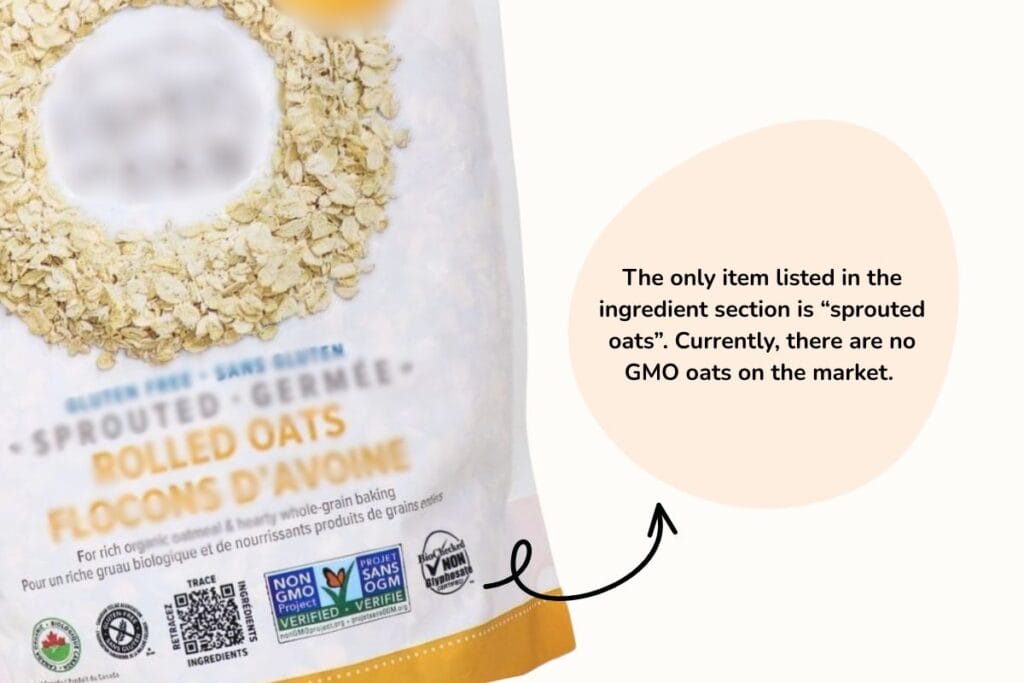
Gluten-Free
This label is essential for people with Celiac disease or a gluten intolerance-it helps them shop safely. But that only applies to a small percentage of people. For the rest of us, gluten is simply a protein our bodies can handle. In fact, gluten-containing grains like wheat and barley often have more fibre and protein compared to corn or rice, which are commonly used to make gluten-free products.
The bottom line? Most of us could use more fibre in our diets-and a lot less worry about gluten.
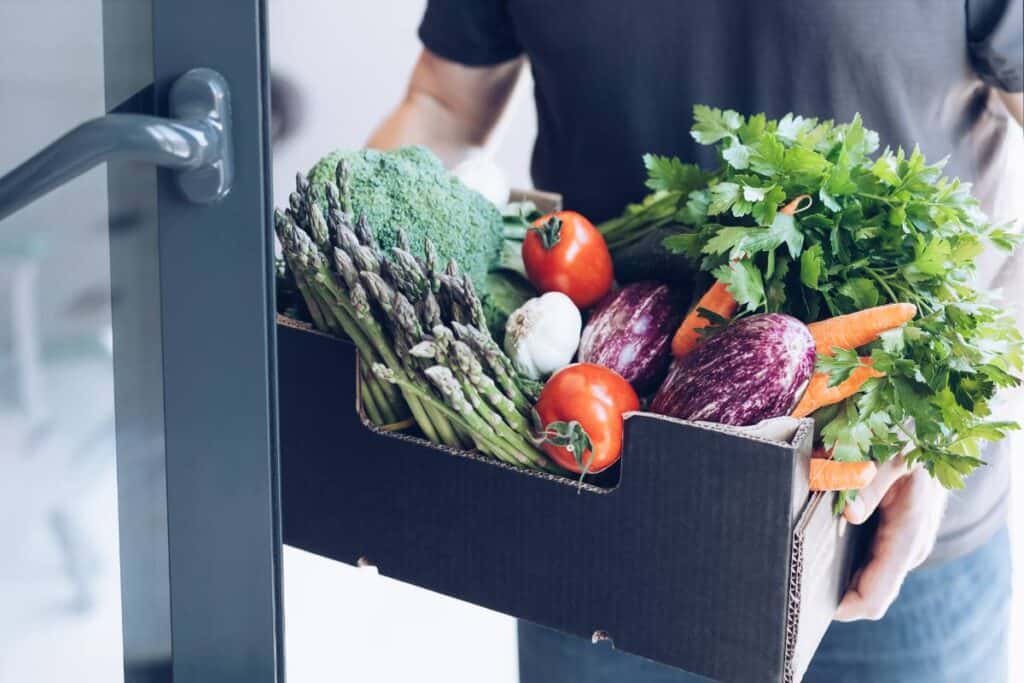
3. Take advantage of delivery or pickup services
Grocery shopping doesn't always have to mean wrangling kids through crowded aisles or waiting in long lines after a busy workday. Using delivery or pickup services can shave hours off your weekly "to do" list. That's extra time you can use to rest (because let's be honest-rest is a form of productivity, too) or to spend more quality time with your kids.
In my (Nita here) own home, I even get my kids involved in the process. Sitting down together to click through our online order has turned into a little activity of its own-they help pick out fruits, snacks, and sometimes even suggest new foods to try.
Another bonus?
Shopping online gives you the chance to slow down and look at the actual nutrition facts instead of getting distracted by the shiny buzzwords on packaging like "non-GMO," or whether the product sits in the "natural" section. It might feel easier to compare options side by side and choose the foods that truly fit your family's needs.
Pro Tip: Schedule your grocery pickup for right after school drop-off or on your way home from activities!
4. Get meal planning
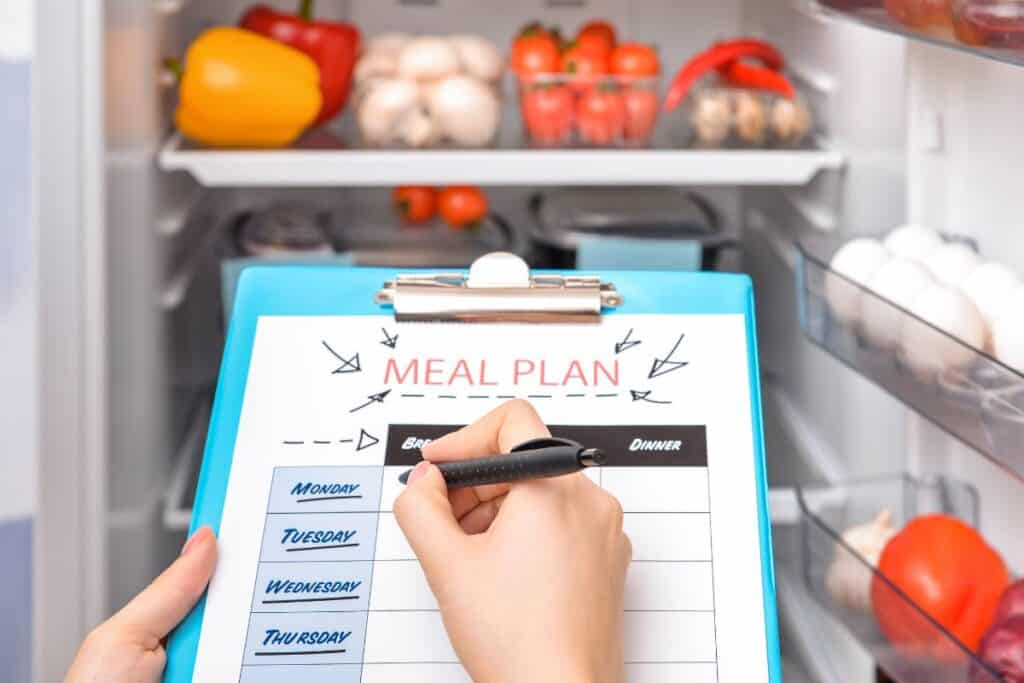
When the school year kicks into gear, "winging it" at mealtimes usually means one of two things: extra stress for you, or less balanced meals for the family. A little meal planning can go a long way in setting your family up for success.
Creating a plan doesn't have to be complicated-you don't need a color-coded binder or hours of prep. Even sketching out a few dinners for the week can make sure there's room for balanced meals and snacks. It also means you can plan for intentional leftovers, which are lifesavers when it comes to packing lunches or pulling together a quick dinner on a hectic evening.
We like to keep a running list of our family's go-to meals also known as the "greatest hits" on our phone or in the pantry cupboard. This way, when planning feels overwhelming, we can pull from the list!
Need another reason to plan your meals? It saves us time when grocery shopping because you're not wondering "what should I buy?" only to be missing half of the ingredients you need! Plus, it helps us prevent food waste by encouraging us to use what we already have at home.
Pro Tip: Depending on your child's age, consider inviting them into the planning process. When kids get to help choose a meal (even if it's just "pasta night" or "taco night"), they're more likely to feel invested and excited about eating it.
5. Frozen and canned produce for the win!
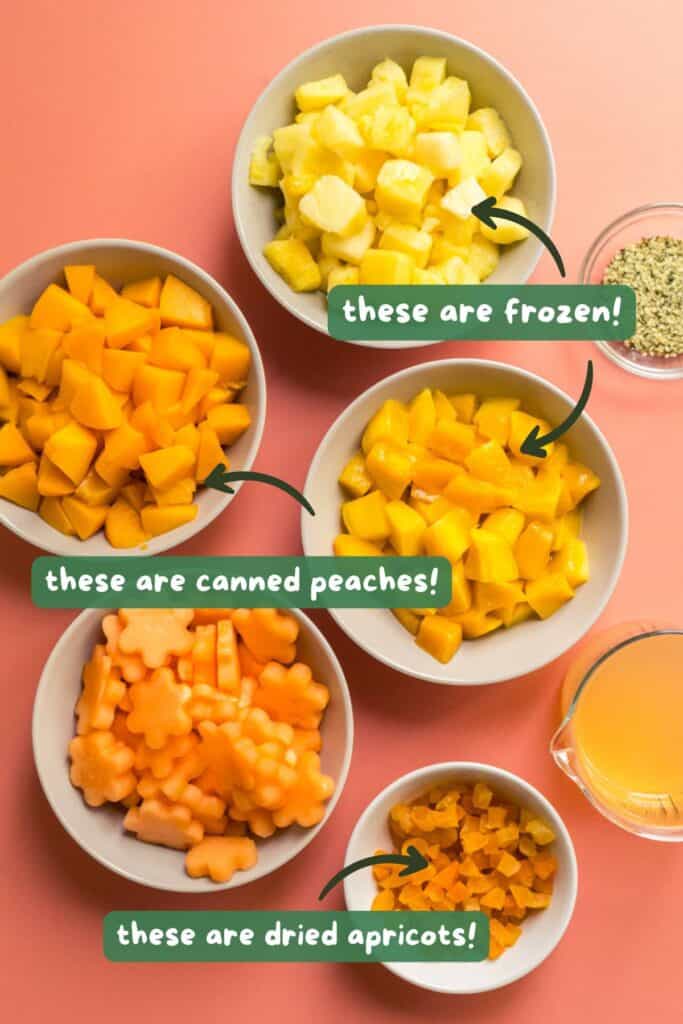
Fresh produce is wonderful, but let's be real-it isn't always the most practical (or affordable) choice for many families. This is where frozen and canned fruits and veggies shine.
They're often more budget-friendly, last longer in your pantry or freezer (no food waste!), and are picked at peak ripeness-meaning they're just as nutritious as their fresh counterparts. In fact, for picky eaters, frozen and canned can actually be a win since the taste and texture are more consistent from batch to batch.
And here's some peace of mind: whether fresh, frozen, or canned-and whether grown conventionally or organically-produce in Canada meets strict safety standards. Pesticide residues are carefully monitored and remain far below maximum residue limits. What does this mean? I think you know where we're going…you can feel confident knowing these foods are safe and nourishing options for your kids.
Pro tip: when shopping for canned fruit, check the label and choose options packed in their own juice instead of syrup. This helps cut back on added sugars while keeping all the flavour your kids love.
Suggested reading: How to Spot Sugar
6. Rotate through the same trusted foods
The start of a new school year comes with a whirlwind of change. A new grade, new teacher, new classmates, new subjects-even new shoes that still squeak a little when they walk down the hallway. For kids, that's a lot of "new" all at once.
In the middle of all that change, familiar foods can act like a security blanket. That's why the lunchbox isn't always the best place to experiment with something brand new. Home is the better stage for food adventures-where your child is comfortable and relaxed. At school, those tried-and-true favorites can feel like a steady friend in an uncertain setting.
Of course, it's all about balance. Pack the exact same lunch every day and boredom sets in quickly-then suddenly, your go-to options lose their magic. Swing too far in the other direction with endless variety, and you lose the comfort factor that familiar foods bring.
Every child has their own "greatest hits" list. For some, it's long and varied. For others, it might only include a handful of foods. Whatever your child's list looks like, use it as your rotation. Over time, as they settle into their new routine, you can start gently expanding their menu again.
7. Be mindful of online misinformation
Your child is sitting beside you, happily crunching on a snack, when you open Instagram. Within a few swipes, you stumble on a post warning about that very food. You start to wonder, "Am I feeding them the wrong thing?" "Do I really need to worry about these fruits and veggies?".
You're not alone. Food fearmongering is everywhere online. And honestly? It lights a fire in us in the most protective, mama-bear kind of way.
It's one of the main reasons we keep showing up here-to be a steady counterweight of facts and science in the middle of all that noise. Because while the internet is great at spreading eye-catching headlines, it's not always so great at spreading the truth.
Here's what we do know: after years of studying food and nutrition at a university and more than a decade of professional experience and continued education, we feel confident in this-while nothing is perfect, our food system is designed to provide safe, nutritious food. Whether it's grown organically or conventionally, whether it involves GMO crops or not, and even if you forget to rinse those berries before your kids dive in, the food itself is still safe and nourishing.
So if social media is starting to make you second-guess every bite your child takes, it may be time for a little "feed detox."
Here are a few gentle ways to start:
- When you see a post, pause and ask yourself: does this advice make me feel anxious, or empowered? If it stirs up anxiety, that's a red flag.
- Use the platform's tools to tell the algorithm you want to see less content like that.
- And if an account consistently leaves you feeling worried or fearful, consider giving yourself permission to hit unfollow.
Your mental space is important for you and your children. Keeping it clear of fear makes room for confidence and peace of mind.
At the end of the day, feeding your family doesn't have to feel like a never-ending puzzle. A mix of whole foods and convenient helpers, a few time-saving strategies, and a healthy dose of perspective can take the stress out of shopping and mealtimes.