Baby Eczema and Food: What Parents Need to Know
The world of eczema is inundated with a lot of information, including misinformation. In this article we offer an evidenced based approach to better understand if and how food can play a role in your child's eczema symptoms. You'll even walk away with a better sense of nutrients to focus on to optimize skin health.
This post may contain affiliate links.
Bite-Sized Takeaways
🧱 Eczema is a skin barrier issue, not something you caused
🔥 Food doesn't trigger eczema, but it can make an active flare worse
🥣 Most babies with eczema can start solids at 6 months, top allergens included.
‼️ Avoiding foods "just in case" can actually backfire
🧴 Put a thick emollient on before meals to protect irritated skin
🩺 Only try food elimination with a healthcare provider guiding you
SUMMARIZE AND SAVE THIS CONTENT ON:
Important note: This article is for education only and is not meant to replace medical advice. Every child is different. If you have concerns about your child's eczema, growth, or reactions to food, please speak with your child's healthcare provider.
If your baby or toddler has eczema, you're not alone. Eczema is very common in childhood. About 1 in 5 children will develop eczema, and most children show signs before age five. Hard to watch as a parent, a baby's skin can become itchy, uncomfortable, and sometimes painful.
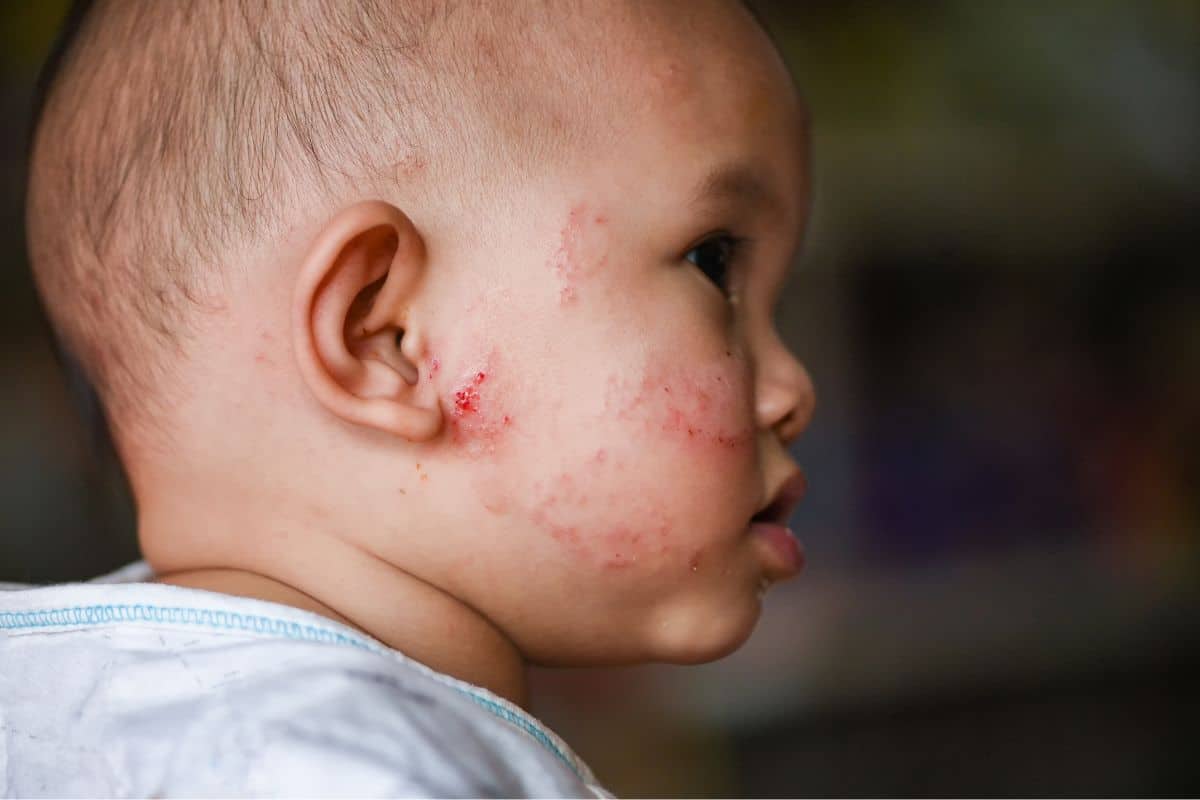
Since eczema often shows up around the same time babies start solids, many parents wonder if they did something wrong or if food is to blame. The reassuring news is that eczema is not caused by parenting choices, and food is not usually the reason eczema starts, especially since many infants struggle with it before even starting solids. Understanding what eczema really is can help take some of the worry and self-blame out of the picture.
Jump to:
- Bite-Sized Takeaways
- Understanding eczema in simple terms
- Do specific foods cause eczema? Clearing up the confusion
- Food Allergy vs. Eczema
- Starting solids when a baby has eczema
- Should any foods be avoided to help a baby with eczema?
- Can any foods help heal eczema in a baby?
- Practical skin care tips that support eczema control
- When to get extra support
- Other recommended infant nutrition articles
Understanding eczema in simple terms
Eczema, also called atopic dermatitis, is best understood as a skin barrier condition alongside an overactive immune system. Think of the skin like a brick wall. When the wall is strong, it keeps moisture in and irritants out. People who are prone to developing eczema have less of the "mortar" (called filaggrin) that holds the "bricks" (skin cells) together. Without enough mortar tiny cracks form in that wall. Through those cracks moisture is lost (making the skin dry and brittle) and things from the environment - like soap, saliva, food, or germs can get into the skin more easily.
When this happens, the immune system steps in to protect the body against foreign invaders. This immune response leads to redness, itching, and inflammation. Eczema is closely linked to how the skin barrier and immune system work together. It often runs in families and we now know why: a filaggrin gene mutation has recently been discovered. Some children are simply born with skin that is more sensitive and reactive to the world around them.
Do specific foods cause eczema? Clearing up the confusion
Since eczema is caused by a break in the skin barrier, how does food play a role? Or does food play a role in baby eczema? Let's examine a few points.
- The Atopic March
The atopic march describes how some children who start with eczema go on to develop IgE food allergies, then environmental allergies, and then asthma. While this doesn't happen with every child, it's a common enough pattern that there's a name for it!
In all these cases there's a common denominator involved: an overactive immune system.
- The Inflammatory Response
During an eczema flare-up, your immune system goes into high gear. Think of it like an army. When everything is calm, soldiers are relaxed and just doing their regular training. But when there's a threat, they snap to attention and are ready to react to anything.
An eczema flare-up puts your whole body on high alert, not just your skin. Your immune system is snapped to attention and looking for trouble.
This is where food comes in. Some foods can act like adding logs to a fire. If your body is already inflamed, certain foods might make that reaction even stronger.
The food didn't start the fire, but it could make it burn hotter.
- The IgE Reaction and the Skin
The skin can experience a reaction from a food allergy, but it looks different than eczema.
An IgE-mediated food allergy is an immune reaction that usually happens quite quickly after eating. Symptoms may include hives, swelling, vomiting, coughing, or wheezing.
Food Allergy vs. Eczema
| IgE-Mediated Food Allergy | Eczema Flare | |
| When it happens | Usually within minutes to two hours after eating | Hours to days after eating |
| Speed of reaction | Sudden and fast | Gradual or delayed |
| Skin appearance | Hives (raised, itchy welts), swelling | Red, dry, itchy patches in typical eczema areas |
| Location on body | Can appear anywhere on the body | Usually in familiar eczema spots (cheeks, folds, hands, behind knees) |
| Other symptoms | May include vomiting, coughing, wheezing, swelling | Skin symptoms only |
| Allergy testing | Shows up on IgE allergy testing (70-90%) | Does NOT show up on standard allergy testing (unless there's a co-occurring food allergy) |
| Severity | Can become severe and require urgent medical care | Uncomfortable but not life-threatening |
| Main treatment focus | Avoid confirmed allergen + emergency plan if needed | Strengthen skin barrier + manage inflammation |
Starting solids when a baby has eczema
Starting solids can feel both exciting and stressful. When you add eczema into the mix, it can feel even more overwhelming. Many parents worry that every new food might make their baby's skin worse, which can take some of the joy out of this stage.
Let's break it down, step-by-step.
When to start solids when a baby has eczema
The reassuring news is that most babies with eczema can start solids around six months, when they are developmentally ready, and can be introduced to common allergens such as egg, peanut, sesame, and wheat. Your allergist may even recommend you introduce peanut protein around four months of age (please only do this when medically directed!).
What to feed when starting solids with a baby who has eczema
Unless you've been given specific medical direction from your baby's healthcare provider, your baby can be introduced to all foods, including the top allergens. Avoiding foods "just in case" is not recommended. Restricting foods without guidance can actually increase the risk of IgE-mediated food allergies, make feeding more stressful, and affect growth and nutrient intake.
Apply an emollient for protection
When eczema is active, and the skin barrier is broken (imagine eczema on the hands or around the mouth), food proteins can enter through the skin. This is called the dual exposure hypothesis.
The immune system is designed to meet food proteins in the gut, where there are many checks and balances that help build tolerance. The skin's immune system works differently - it's designed to spot danger and react quickly. When food proteins enter through broken skin, the immune system may respond as if they're invaders.
Some foods, especially acidic ones like tomato or citrus, can irritate already inflamed skin, particularly around the mouth and neck. This is more of a contact reaction, and not an allergy.
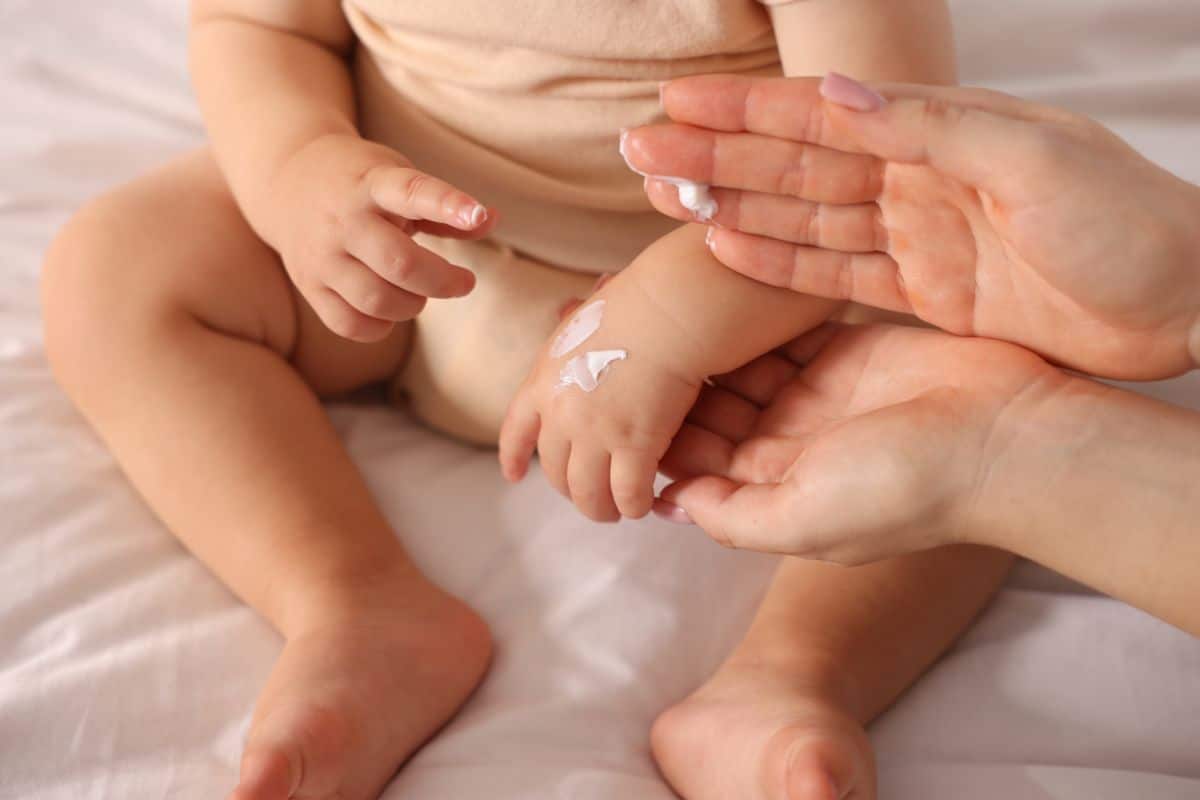
Using a thick emollient before meals can help reduce irritation during messy eating while allowing feeding to continue. Emollients are thick, moisturizing products that help seal in moisture and protect the skin barrier.
Should any foods be avoided to help a baby with eczema?
Are there any times when a food elimination can help improve eczema?
Maybe!
Remember how some foods can "add fuel to the fire" during an active eczema flare? So while these foods aren't at the root cause of eczema, removing them can sometimes be supportive so as not to increase the body's inflammatory response that has already been triggered.
In select cases, food removal may be explored - but only with supervision from a healthcare professional. Common foods sometimes explored include cow's milk especially if a baby has an existing cow's milk protein allergy, egg, wheat, soy, or peanut, and only when there is a strong clinical reason. Elimination trials are typically short-term, carefully planned, and followed by a structured re-introduction to confirm whether the food truly plays a role.
Elimination trials are sometimes used for a breastfeeding mother or for the baby who has started solids… or both mom and baby!
Can any foods help heal eczema in a baby?
While nutrition does not replace eczema treatment, it can support the body in important ways - especially during infancy and early childhood when growth and development are rapid. Unfortunately, there is no cure for eczema. Nutrition supports overall health by supporting growth, immune function, and skin healing.
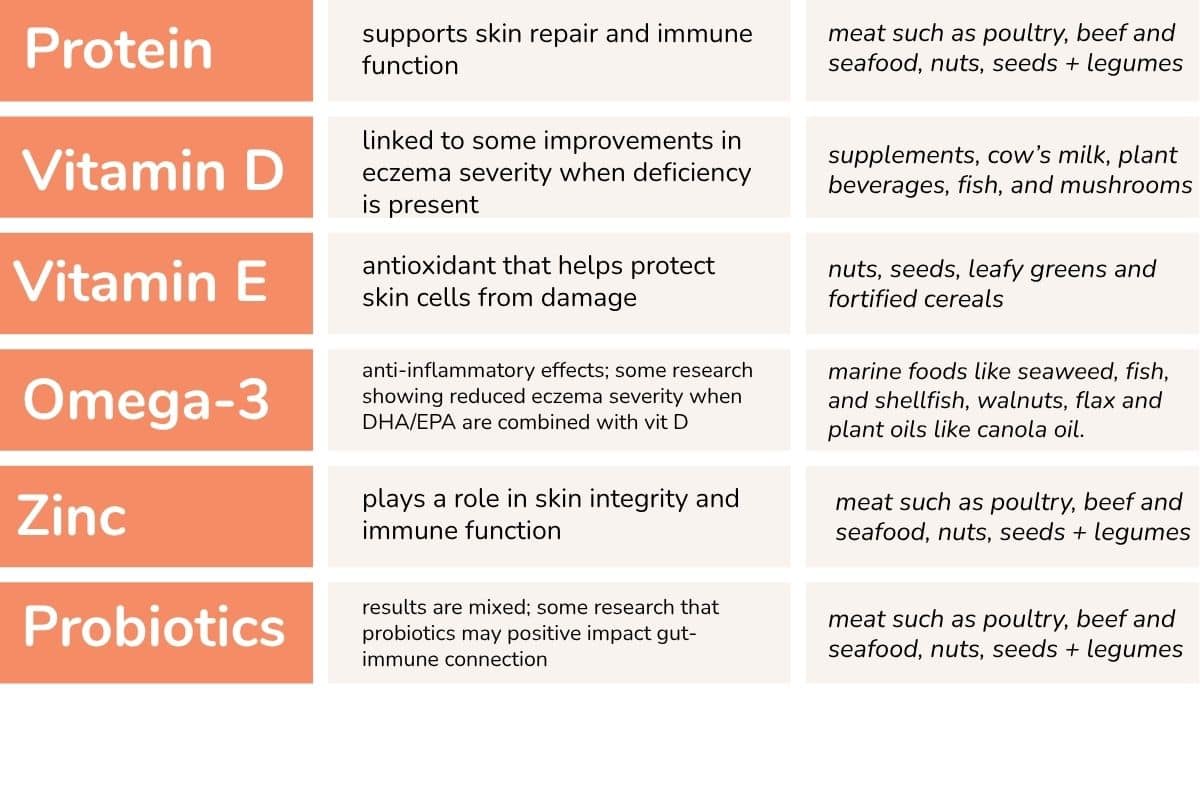
Key nutrients that can support overall health include:
- Protein: is essential for growth, tissue repair, and overall development in infants and young children. Adequate protein intake supports skin repair and immune function
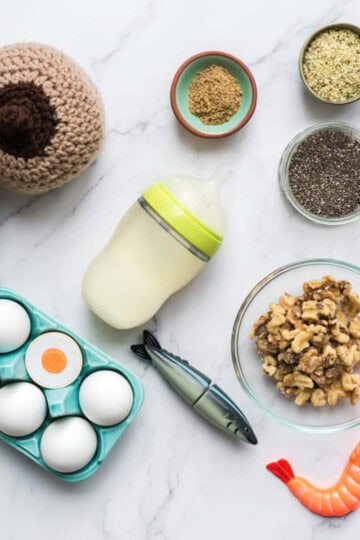
- Dietary sources: meat such as poultry, beef and seafood, nuts, seeds and legumes.
- Dietary sources: meat such as poultry, beef and seafood, nuts, seeds and legumes.
- Vitamin D: linked in some studies, Vitamin D has shown modest improvements in eczema severity when deficiency is present.
- Dietary sources: Food is not the ideal source of vitamin D which is why supplementation is often recommended. Some foods with vitamin D are cow's milk, some plant beverages, some fish, and mushrooms.
- Dietary sources: Food is not the ideal source of vitamin D which is why supplementation is often recommended. Some foods with vitamin D are cow's milk, some plant beverages, some fish, and mushrooms.
- Vitamin E: is an antioxidant that helps protect skin cells from damage. While Vitamin E supports skin health through its antioxidant role, evidence does not show that vitamin E supplementation alone significantly improves eczema symptoms.
- Dietary sources: nuts, seeds, leafy greens and fortified cereals.
- Dietary sources: nuts, seeds, leafy greens and fortified cereals.
- Omega-3 Fatty Acids: have anti-inflammatory effects, with some research showing reduced eczema severity when DHA and EPA are combined with vitamin D. Beyond this, there's a lot of reasons babies benefit from omega-3 and we do a deep dive into this nutrient with suggested recipes here!
- Dietary sources: marine foods such as seaweed, fish, and shellfish, walnuts, ground flaxseed, and plant oils like canola oil.
- Dietary sources: marine foods such as seaweed, fish, and shellfish, walnuts, ground flaxseed, and plant oils like canola oil.
- Zinc: plays a role in skin integrity and immune function, and lower zinc levels have been observed more often in people with eczema. However, evidence that zinc supplementation improves eczema is limited unless a true deficiency is present.
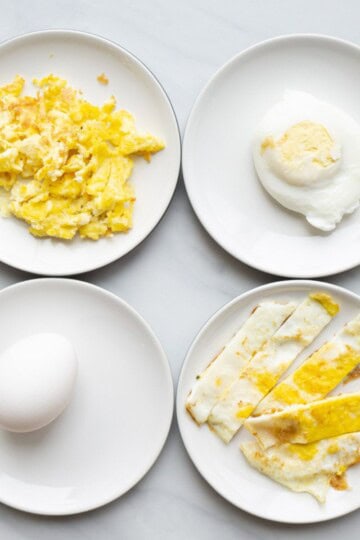
- Dietary sources: meat, seafood, eggs, dairy products, beans, nuts and whole grains.
- Dietary sources: meat, seafood, eggs, dairy products, beans, nuts and whole grains.
- Probiotics: may influence the gut-immune connection and have been studied for their potential role in eczema. Results are mixed and depend on the strain used, so they are not a standard treatment.
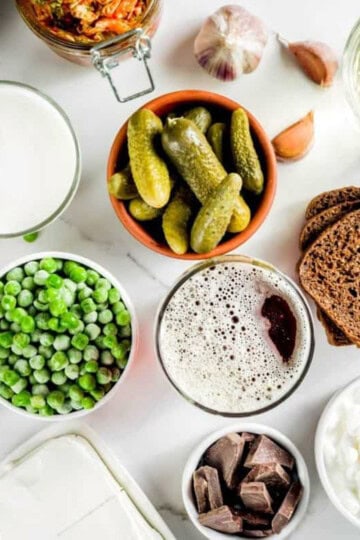
- Dietary sources: specific foods such as yogurt, kefir and other products on the market may have live active probiotics added to them.
A variety of foods helps meet a child's nutritional needs, while skin care remains the foundation of eczema treatment.
Practical skin care tips that support eczema control
Research also shows that poorly controlled eczema can increase the risk of developing food allergies over time, making eczema management so important.
Broken or inflamed skin absorbs substances more easily, so it's important to be mindful of what goes on your child's skin.
- "Natural" products, such as essential oils, are not always gentler or safer
- Choose simple, fragrance-free products and discuss new therapies with a care team
- Keep eczema well protected with thick emollients
- Wash your hands before handling your baby's skin. For example: if you've made yourself a peanut butter toast, wash your hands before handling your baby to avoid peanut exposure through the compromised skin barrier
- Choose hypoallergenic, fragrance-free laundry detergent
- Change diapers promptly to avoid urine and stool from getting on their skin and further irritating it
- Keep nails short to reduce skin damage from scratching
- Consider a humidifier in dry environments
- Minimize saliva sitting on the skin (especially around the mouth and neck)
When to get extra support
Extra support may be helpful if eczema is severe or not improving, if feeding feels stressful or overly restrictive, if growth or nutrient intake is a concern, or if immediate reactions occur after eating. Eczema can be challenging, but you don't have to figure it out alone. With the right support, a strong skin care plan, and confidence around feeding, many children see their eczema improve over time.
Pediatricians, dermatologists, allergists, and registered dietitians can help guide next steps and support both skin health and nutrition.