8 Strategies to Help Your Baby Fall in Love with Veggies
Help your baby learn to enjoy vegetables with these simple, research-backed strategies from Registered Dietitians. Practical tips to make veggie introductions easier and more enjoyable.
This post may contain affiliate links.
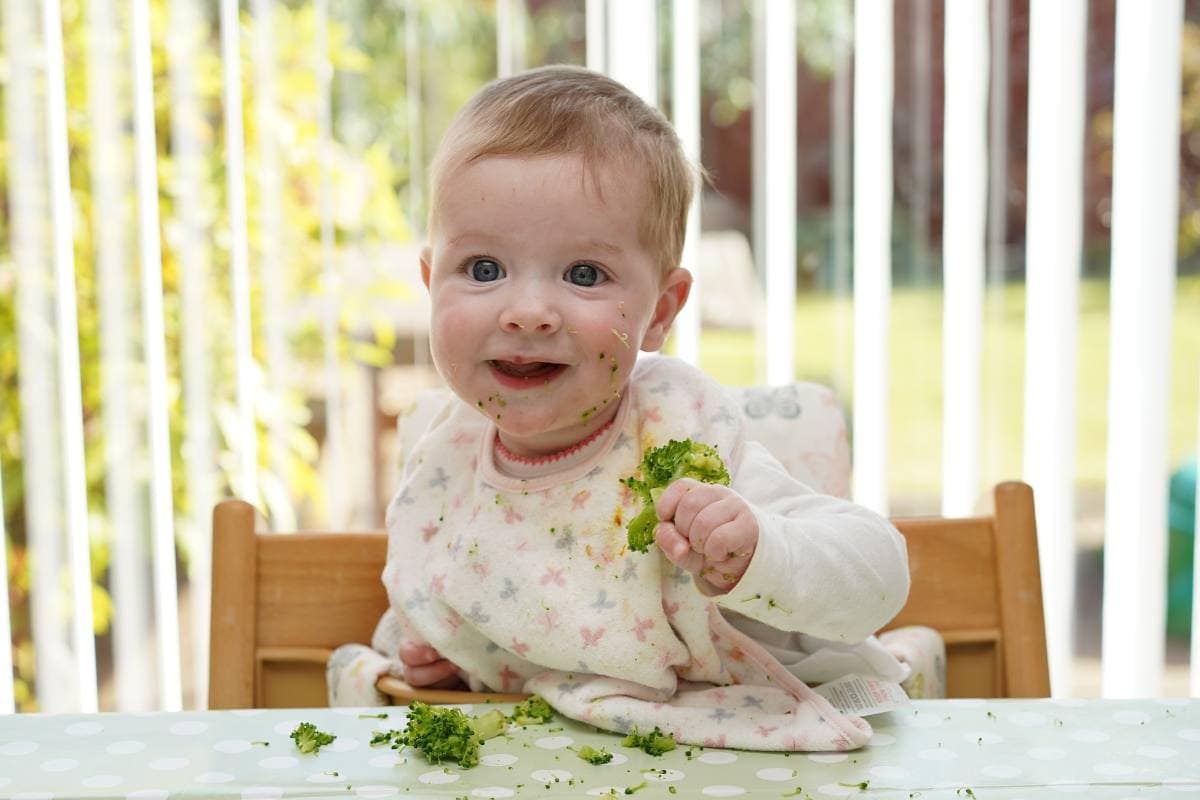
When it's time to start your baby on solids there is A LOT to think about. Questions like "What high chair should I buy?" and "Should I start with solids or purees?" and "How do I introduce allergens?" are all questions we hear regularly from parents in this exciting phase (and we answer all of them in our ecourse Start Solids Confidently!).
Another question we've been hearing more often these days is "Should I introduce veggies to my baby before fruit?". To be honest, we get the curiosity here. Many of us know vegetables are packed with nutrition and that eating them has shown to protect us from diseases like type 2 diabetes, heart disease, and cancer. Combine this with knowing that what children eat early in life can shape their growth, development, long-term eating habits, and overall health -and it's easy to understand why parents are elated to see their babies eating vegetables.
Despite this, we know from professional (and personal) experience that encouraging kids to simply eat, let alone enjoy veggies, can be harder said than done. And research actually supports this - most children do not eat enough vegetables. There are a number of reasons for this that vary from biological and evolutionary factors to the way parents introduce solids to their babies. And, as parents ourselves we want to remind you that all the veggies you purchase (organic or not) are safe for your baby.
Now, before you throw in the towel with veggies, do you know what else the research shows? That there are proven strategies parents can use that actually lead to babies eating and enjoying more vegetables on their own! It's true. We've seen these strategies work not only for parents we've helped as dietitians, but also as moms for our own babies.
Bite-Sized Takeaways
🥕 Babies may need repeated, pressure-free exposure to learn to enjoy vegetables, so don't give up after a few tries.
😄 Eating and enjoying vegetables alongside your baby can encourage them to try and accept them too.
🌈 Offering different vegetables, preparations, and textures can help build acceptance and interest in a wide range of foods.
🍍 There is no need to separate fruit and vegetables; offering them together doesn't prevent babies from eating their veggies.
🥩 Prioritizing iron-rich foods should be a focus when introducing solids
SUMMARIZE AND SAVE THIS CONTENT ON:
Why babies prefer sweet tasting foods
As mentioned, there are biological reasons why it can be challenging for babies to enjoy vegetables and what it comes down to is taste. Babies are hard-wired to prefer sweet tasting foods. This starts in the womb where they get sips of sweet tasting amniotic fluid! Then if a baby is breastfed, their first source of nutrition is colostrum and later mature breastmilk which…you guessed it…is also sweet!
From a survival perspective this actually makes a lot of sense. Sweet foods = energy, and energy = growth, development, and SURVIVAL! In other words, babies are primed to like sweet foods because a) it's familiar and b) it drives them to a food source (aka breastmilk) that provides everything they need to grow and survive for the first months of life, including calories, but also all the other magically components of breastmilk like bioactive agents that promote immunity!)
When a baby starts solids, this preference for sweet foods doesn't go away. If you've ever seen a baby eat fruit (a sweet food!), you would probably agree and so do we. The vast majority of babies LOVE fruit. Thinking about all of the above, this checks out. Fruit is sweet and sweet means familiarity and survival. A no-brainer for babies.
Why veggies are tricky for early eaters
There are also hard-wired reasons why veggies are tricky for early eaters. Again this comes down to taste, but this time the bitter taste.
If you've ever fed a baby or seen a baby who is just starting solids eat you may have noticed an unpleasant look on their face when offered bitter foods, like veggies (broccoli and spinach we are looking at you!). Here's why - historically bitterness in foods signaled possible danger, like the presence of toxins or harmful compounds. As a result, humans have needed to be cautious of bitter tastes-especially in early childhood when the risk of poisoning from unknown plants was higher.
Knowing all this about babies' biological taste preferences, coupled with the data linking eating vegetables to better health, we get why you may wonder if you should offer vegetables before fruit to your baby. You may be thinking "If my baby is going to naturally love fruit, but vegetables are going to be a harder sell, shouldn't I start with veggies and hold off on fruit?" We've had the same thoughts…
What should a parent do? 8 strategies to promote the love of veggies
So you want your baby to eat and enjoy veggies?
You're in luck!
There are evidence-based strategies you can implement when starting solids that have been shown to not only increase the amount and variety of vegetables consumed, but also how much a baby enjoys vegetables. And isn't that really the goal - to nurture an intrinsic love within our little eaters for foods that will nourish them. We sure think so.
STRATEGY 1: Repeat neutral exposure!
Time and time again we see that repeat exposure to vegetables is key to helping our babies accept veggies. While exact numbers of exposures needed is of course going to vary baby to baby and veggie to veggie, it seems that 8-10 exposures to a vegetable not only leads to an increase a babies' acceptance of that vegetable, but also an increase in accepting other vegetables.
Another thing - just because your baby makes a "ew gross" face when they are offered a particular food doesn't mean you should stop offering it. There's some really cool research that has shown how babies' response to food evolves with repeated exposure. Meaning babies can learn to like foods they continue to try! Additionally, it seems it can be harder to read a baby's face than you might think - a baby may grimace not because they don't like a food, but just because it's new and unfamiliar.
The moral of the story - keep offering veggies!
We often say around here that babies (and kids) can't learn to like foods they're never served. We know first hand how discouraging it can be to keep offering foods when your baby is not eating them. However, we hope this evidence is enough to support you in sticking with it!
You can make our veggie-loaded pasta sauce, which contains seven different veggies. Then freeze it in an ice cube tray. Defrost and reheat some every couple of days so that your baby has plenty of opportunity to become familiar with the taste.
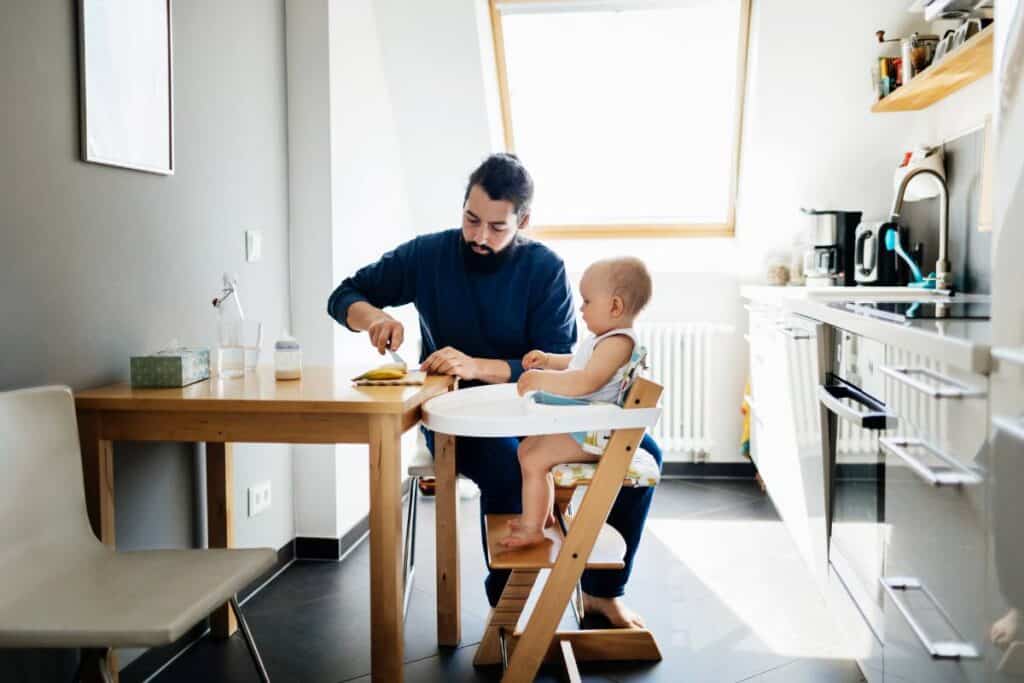
STRATEGY 2: Eat alongside your baby
Modeling the behaviour you want to see is going to be your biggest flex! Don't forget to eat vegetables alongside your baby so that they can see you enjoy them, and learn from you.
STRATEGY 3: Switch it up
If your baby doesn't seem to enjoy a vegetable prepared one way, then switch it up!
-
- Experiment with different cooking methods while still ensuring the food is still the right size, shape, and texture to match your baby's developmental stage.
-
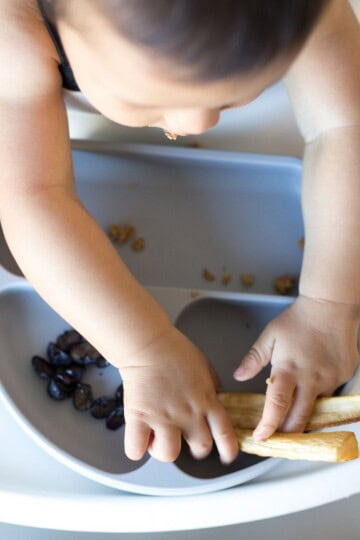
- Vary how you serve food to your baby. You could place the food directly on the high chair tray instead of on a plate. You could use a crinkle cutter for a different sensory experience.
-
- Get creative with spices and flavourings (just be sure to avoid anything spicy!)
STRATEGY 4: Experiment with flavour pairings
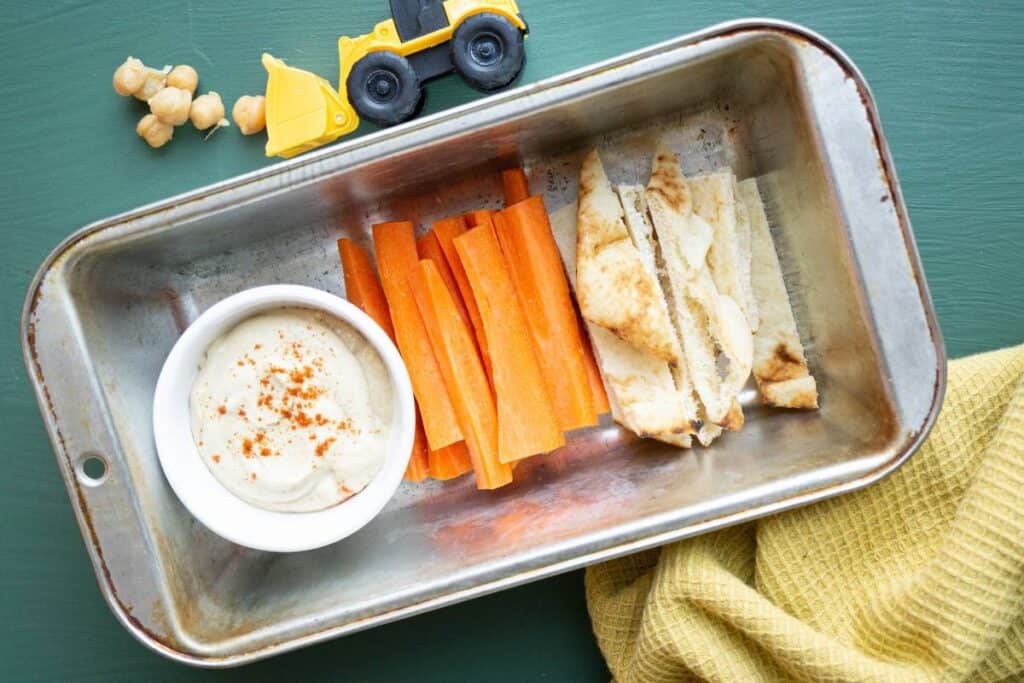
When was the last time you enjoyed steamed cauliflower without any salt, seasoning, or oil? There's a reason most people don't eat plain veggies- they just aren't very tasty! Chances are, if you don't enjoy it, your baby may not either.
Instead, pair veggies with a dip, sauce, or add some fat. This will help reduce the bitterness.
STRATEGY 5: Offer Vegetables Early in Your Feeding Journey
There's a "window of opportunity" that has been seen in babies up to 9-10 months of age, where they are more willing to accept different flavours and textures. We are big believers in using this "window" to your advantage and always encourage parents to offer vegetables to their babies early in their feeding journey. This allows them to get in plenty of vegetable exposures while babies are primed to try them.
STRATEGY 6: Prepare A Variety of Vegetables to Your Baby
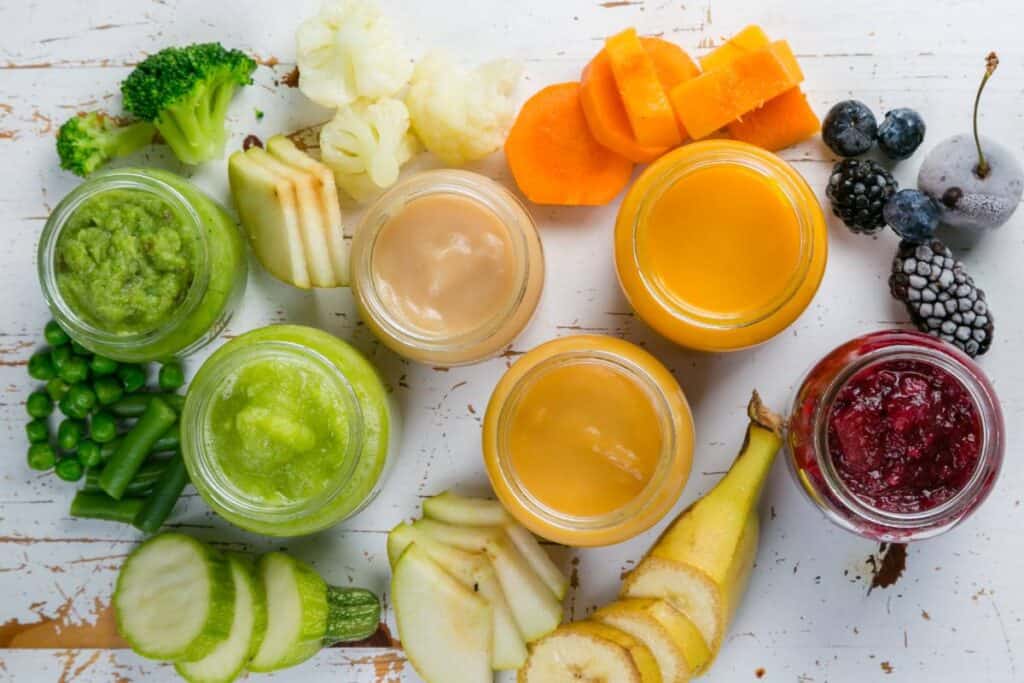
This strategy is a favourite of ours too. Not only does offering your baby a variety of vegetables provide them with a variety of nutrients, but it also has been shown to promote vegetable intake in kids up to three years old. So switch it up! This can be day to day at first and then meal to meal as your baby moves towards three meals a day.
If you're looking for more guidance on meal timing and frequency when starting solids, you'll love our free guide "Sample Meal and Snack Schedule".
STRATEGY 7: Offer Fruits and Vegetables Together
Ok here's the thing, while you may initially think that offering your baby fruit (a sweet food) with veggies (a bitter food) would result in them not eating the veggies, BUT data says otherwise. It seems that introducing a fruit is not typically going to stop them from eating the veggies as well. So, no need to separate veggies from fruit within the same meal.
STRATEGY 8: Offer some meals without fruit if baby has a preference
Here's our caveat to that last point - in our experience there are some babies who really love fruit, and by really we mean REALLY. Who can blame them? If you are finding that when fruit is offered your baby doesn't eat much else, you can offer meals without fruit. There's no need to worry about meals without fruit lacking nutrition, as many vegetables are sources of the same nutrients found in fruit. Plus, we prefer this strategy to limiting the amount of fruit offered at a meal simply because we try to avoid a "scarcity mindset" when it comes to feeding our kids.
So what is the best first food?
Even though veggies are nutrient powerhouses and are key parts of an early eaters diet, it remains clear that IRON RICH FOODS are the best first foods for babies. We will continue to shout this from the rooftops til the end of time. Iron is a key nutrient for babies who are starting solids.
This is because:
a) it is vital for optimal growth and development and babies are doing a lot of growing!
b) a baby's iron stores, which they have been relying on since birth, are typically depleted by the time they are ready to start solids (usually around 4-6 months of age).
On top of that, iron deficiency can have irreversible effects when it comes to growth and brain development. This being the case, we are big believers that prevention is the best medicine when it comes to iron. That's why we devoted an in-depth section of our ecourse Start Solids Confidently to all things iron, including where to get it and dozens of ways to offer it to your baby.
There's nothing we love more than supporting parents on their feeding journey and we would be honored to help you on yours - buy the ecourse today.