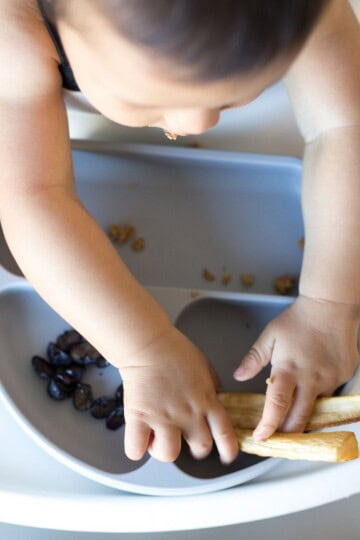
How to Serve Eggs to Babies (5 easy ways)
Wondering how to serve eggs to your baby? We've rounded up five dietitian-approved easy, baby-friendly ways to offer eggs including baby-led weaning and spoon-feeding ideas.
This post may contain affiliate links. This post was developed in paid partnership with Get Cracking.
Starting solids is one of those milestones that's equal parts exciting and nerve-wracking. We know, because we've done it four times and one thing quickly became clear: no two babies eat the same way.
Some of our little ones happily accepted a spoon, while others wanted nothing to do with being fed and insisted on taking the lead from day one. Quite literally, each baby brought their own personality to the table.
When can babies eat eggs?
But, there was one food that was on the menu early for every single one of them: eggs. That wasn't by accident, it was intentional!
Our babies were born shortly after infant feeding recommendations changed to encourage parents to introduce common food allergens, like eggs, early and often. Backed by research, latest recommendations suggest that eggs be offered right when your baby starts solids, around six months, but not before four months.
As dietitians we were excited to see the research evolve. But as moms, we also remember feeling relieved when our babies tolerated eggs well.
What we appreciate most about eggs is how simple they are to include in family meals. They're quick to prepare, incredibly versatile and packed with nutrients that support your baby's rapid growth and development. Eggs provide:
- High-quality protein to support growth and help build and repair muscles and other body tissues.
- Choline and lutein, nutrients that play important roles in eye and brain development. One large egg provides 100% of your baby's daily choline needs!
- Zinc, which supports normal growth, brain function, and healthy development. And, it plays a major role in taste perception!
Whether you're just getting started with solids or looking for new ways to keep offering eggs, we've rounded up five simple, baby-friendly ideas that work for a variety of ages, stages, and feeding styles. You'll walk away from this with a ton of inspiration!
Key Takeaways: How to Offer Your Baby Eggs
👶 Latest research suggests offering eggs early and often for allergy prevention
🧠 Eggs contain key nutrients for infant brain development such as choline, lutein, and zinc
🍳 There are an endless ways to serve eggs whether spoon feeding or BLW
💛 Offer eggs on their own or as an ingredient
SUMMARIZE AND SAVE THIS CONTENT ON:
Jump to:
- When can babies eat eggs?
- Key Takeaways: How to Offer Your Baby Eggs
- Option 1: Serve your baby puréed eggs
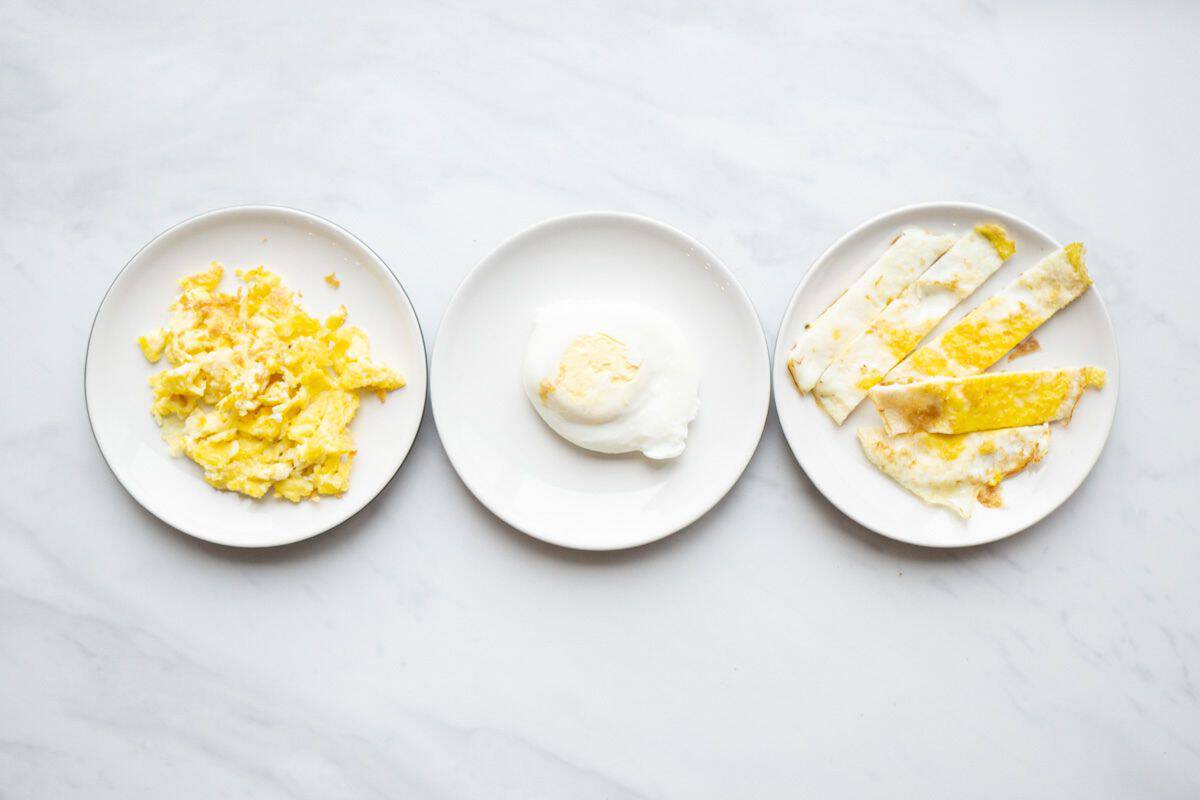
- Option 2: Serve your baby scrambled eggs
- Option 3: Serve your baby hard boiled eggs
- Option 4: Serve your baby an omelette
- Option 5: Serve your baby eggs as an ingredient
- Eggs, so many options for babies
Option 1: Serve your baby puréed eggs
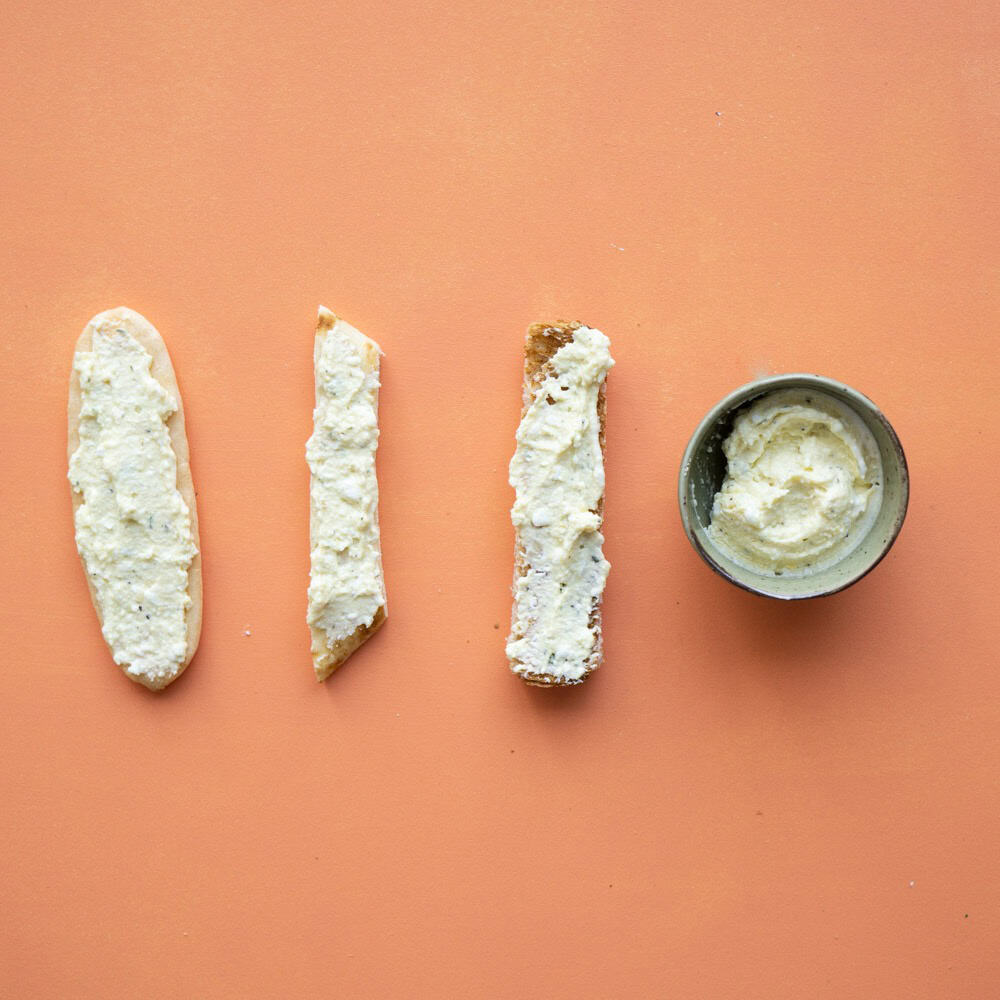
The first, and perhaps most common way that eggs can be offered to your baby is by simply puréeing them. To do this, we recommend that you first hardboil or scramble one to two eggs. Then, place in a tall container (such as a mug) along with 1 to 2 teaspoon of expressed breastmilk or infant formula. Using an immersion blender, pulse until you have a smooth consistency. Feel free to add more breastmilk or formula as needed.
You can then use this purée to spoon feed it directly to your baby, stir into baby cereal, or use it as a spread on top of baby crackers or toast!
As your baby tolerates more and more foods, you can get fancy and mash in other ingredients like in this egg and carrot remix or an egg purée with pears and iron fortified baby cereal.
Option 2: Serve your baby scrambled eggs
Another quick and easy way to offer your baby eggs is to scramble them!
Here are a few tried and true tips to make your baby the perfect batch:
- Crack an egg into a bowl and whisk really really well; you want the egg to be well aerated
- Cook in a lightly greased frying pan heated to medium low temperature
- Pour in the eggs and let them set for a about 15 - 20 seconds and then fold the egg mixture and fold occasionally until the egg is cooked through
- We've found that cooking at a high heat creates a more rubbery texture. With this method, the scrambled egg will be soft
To serve, offer the scrambled egg in a bowl for a baby led weaning approach, or mash further and offer via spoon.
If you really want to get adventurous, you can introduce your baby to a whole new world of flavours and textures by preparing anda bhurji, an Indian style scrambled egg, which is Nita's favourite way to enjoy eggs.

Option 3: Serve your baby hard boiled eggs
Hard-boiled eggs are a convenient, make-ahead option for busy families-us included!
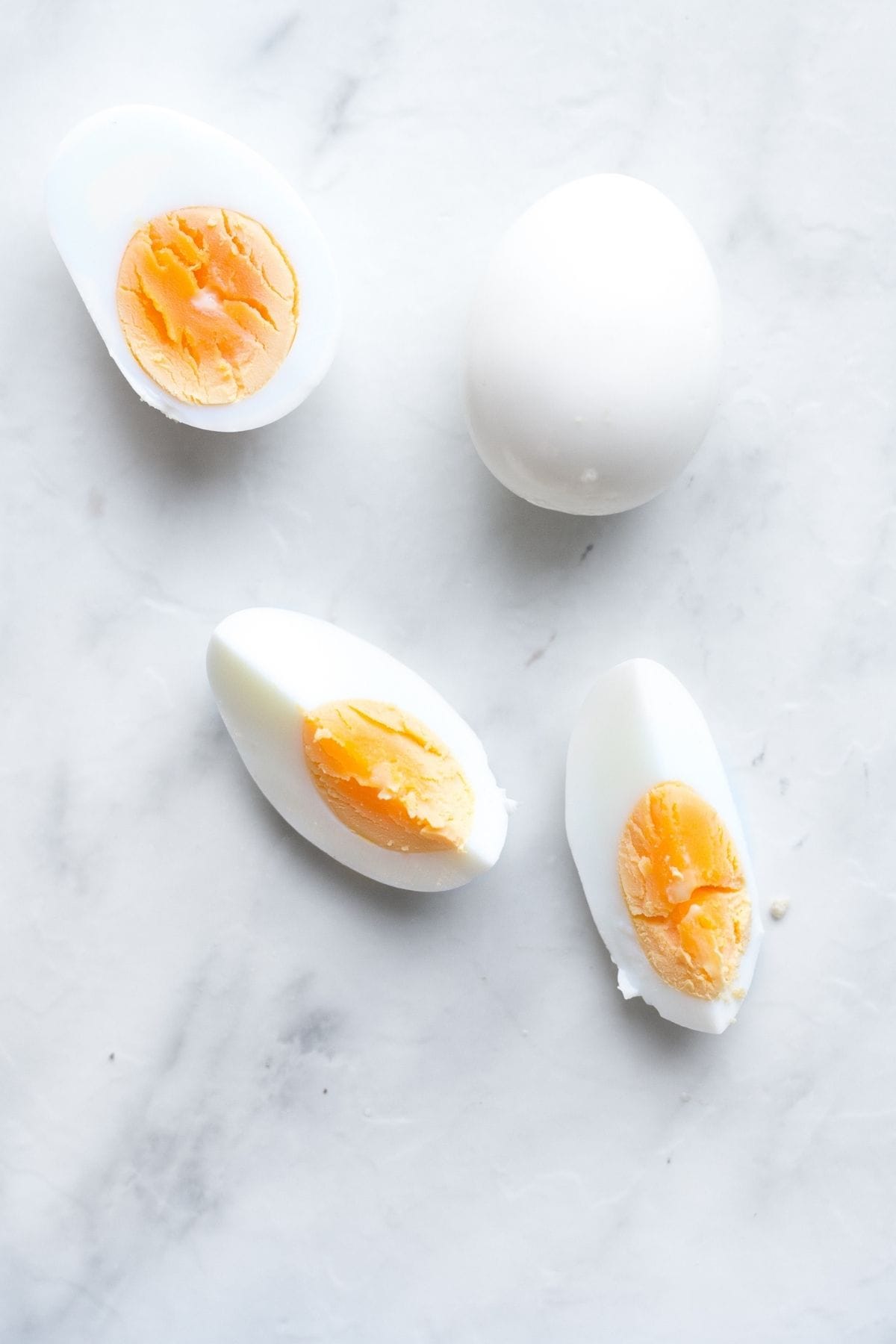
For babies, it's important that the egg is fully cooked. The yolk and white should both be firm, not runny, to reduce the risk of foodborne illness. Once cooked, you can adapt how you serve them based on your baby's age and stage. Finely mash or grate the hard-boiled egg for babies who are just starting solids, or offer bite-sized pieces to older babies who have developed their chewing skills.
If baby led weaning is going well for you, then you can offer the egg sliced in half or quartered.
If you're looking for a foolproof method, the team at Get Cracking has a simple tutorial showing how to make the perfect hard boiled egg with step-by-step instructions.
Here at Happy Healthy Eaters, we love our Instant Pot. If you do too, check out how we make hard boiled eggs using an electric pressure cooker!
Option 4: Serve your baby an omelette
If omelettes are already part of your regular family meals, we have good news: your baby can enjoy them too!
Omelettes are also a great way to introduce new textures and mixed consistencies. You might have a favourite recipe of your own, just follow these steps to make sure it's baby friendly! And if omelettes are new to you, bookmark this step by step article to make the perfect omelette at home!
Plus, omelettes are an easy way to feed your babies vegetables. Veggies can sometimes be tricky for babies to accept, but finely slicing and softening them during cooking can make them easier to manage while still letting your baby experience the taste.
To serve offer a soft omelette cut into strips for baby-led weaning or small pieces for babies practicing self-feeding. If you want to spoonfeed, mash with a fork and offer it this way!
Option 5: Serve your baby eggs as an ingredient
Once you've offered eggs on their own and have established that your baby tolerates them, a whole new world of possibilities opens up! Eggs are incredibly powerful as a binding agent in recipes (ie: they hold things together so that they don't fall apart into a crumbly mess!).
And since eggs offer babies so much nutritional value when we develop baby friendly recipes, we tend to go heavy on the eggs to get more bang out of each bite!
Additionally, if your baby has not learned to enjoy the taste or texture of eggs on their own yet, using eggs as an ingredient is a great evidence-informed strategy to keep up that repeat exposure necessary for allergy prevention.
Make a pan of these baby led weaning banana porridge fingers to add in healthy fats and fibre. They make a great baby led weaning breakfast or on-the-go snack.
For a quick breakfast, whip up a batch of these four ingredient fruit pouch pancakes or this two-minute apple spice mug cake.
Take an hour to bake a double batch of these freezer friendly coconut baby banana muffins. You might be surprised to discover (as we did) that adults enjoy them too- despite there being no added sugar!
For a savoury option, these sweet potato lentil fritters are another baby led weaning hit!

Eggs, so many options for babies
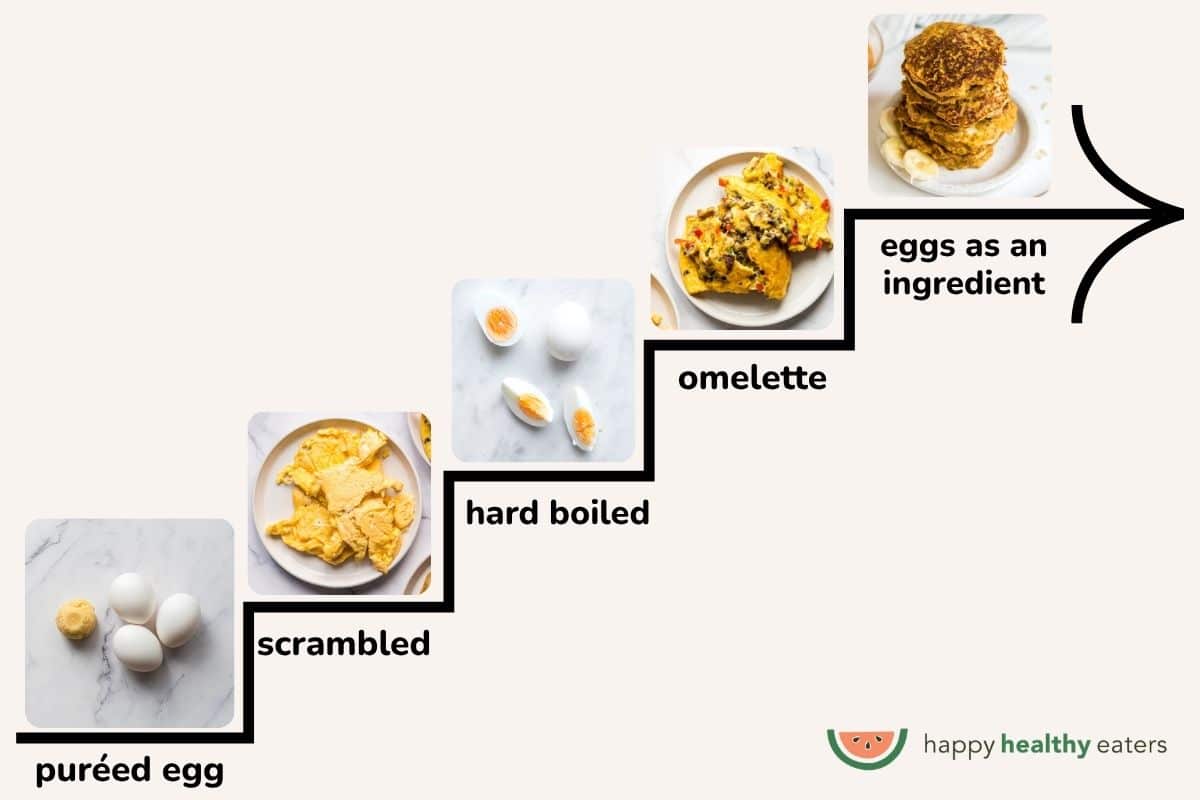
If you paid close attention to the five ways we suggest serving eggs to your baby, you may have noticed something - you can use these as a step-wise approach!
First, offer puréed eggs on their own to test for tolerance. Next, try scramble frying to give your baby experience with different textures. Then offer the hard boiled egg to give a baby a taste for the difference between the yolk and the white. Move up to including veggies into the eggs by incorporating them into an omelette. Lastly, harness the power and nutrition of eggs by adding them as an ingredient into a variety of recipes.
Eggs are too egg-cellent to save for later-pun intended! They can be served to babies who prefers to be spoonfed or those who wants to feed themselves. They're versatile, convenient, delicious, and one of those foods you'll keep coming back to as your baby grows into a toddler and beyond. Introduce them early, and you'll have a reliable mealtime favourite for years to come.