
Why Iron Matters for Kids: signs of low iron and how to help
Iron deficiency is the most common nutrient deficiency in kids. Learn the signs, who's most at risk, and what you can do to prevent it.
This post may contain affiliate links
Bite-Sized Takeaways
⚡️ Iron plays an important role in energy, brain development, and growth
⏰ Fatigue, poor appetite and pale skin can be signs of low iron
👶 Young children, and those who follow vegan or vegetarian diets may be at higher risk of low iron.
🥩 Meat, fish, poultry, legumes, lentils, seeds can help meet iron needs.
🍊 Food containing vitamin C can help improve the absorption of iron
SUMMARIZE AND SAVE THIS CONTENT ON:
This blog post is brought to you in partnership with our friends at Canada Beef and their Think Beef program. As always, all opinions are our own.
We'll be honest-this is a big challenge.
As dietitians, here's what we care about deeply:
- Helping parents feel calm and confident around feeding, so mealtimes can actually be enjoyable
- Sifting through the endless fear-based nutrition messages online and giving you the straight facts
- Making sure kids get the nutrients they need to thrive
Which brings us to iron.
Here's the dilemma: How do we talk about just how important this nutrient is (since a deficiency can have lasting effects) without making parents feel even more anxious?
The truth is, iron deficiency is the most common nutrient deficiency in kids-not only around the world, but right here in North America too. It's a real issue.
But here's the good news: with some thoughtful meal planning (and supplements when needed), it's also a completely avoidable problem.
Our goal with this article? To leave you feeling empowered, informed, and ready to take simple, doable steps to make sure your little one is getting what they need-without any added stress.
In need of recipes to support your littles iron intake? You might want to prepare a batch of these Mennonite Meat Buns that include both beef and lentils! Or, these Prune Breakfast Cookies and we also love this recipe for Sumac Beef--it's seriously so tender!
Jump to:
What exactly is iron's role in the body?
When we talk about iron, it's easy to think of it as just another nutrient on the nutrition facts label-but in reality, iron is responsible for very big jobs inside our bodies, from infancy, through childhood and into adulthood. It's important.
Iron is most famous for its role in helping hemoglobin carry oxygen through the blood. Think of it like the delivery truck that makes sure every cell in your child's body gets the oxygen it needs. Without enough iron, those cells are left gasping for air, and that's when fatigue, sluggishness, and trouble concentrating can show up.
But oxygen transport is just one job.
Iron is also required for over 200 essential enzymes in the body to do their work-including those that are involved in DNA synthesis. (Translation: iron is literally helping your child's body build and repair itself every single day!) It also supports cells in using energy properly, which is why kids with low iron can sometimes seem extra tired or irritable.
And perhaps one of the most important roles of iron in early childhood? Supporting rapid growth and brain development. This is why toddlerhood is such a critical window for making sure your little one is getting enough. Their bodies are growing fast, and their brains are making millions of new connections daily-iron is one of the building blocks that helps fuel that process.
So when we emphasize iron, it's not just dietitian-speak-it's because this one mineral really is a powerhouse for your child's energy, learning, and development.
What can iron deficiency look like?
This is where things can get tricky.
Iron deficiency doesn't always make itself obvious. In mild cases, your child may not show any symptoms at all-which is one reason it can go unnoticed. But as iron levels dip even lower, there may be more noticeable changes.
Some of the most common signs and symptoms of iron deficiency in kids include:
- Weakness and fatigue (your child may seem more tired than usual, even after a good sleep)
- Rapid breathing or fast/irregular heartbeat (their body is working harder to circulate oxygen)
- Dizziness, headaches, or fainting
- Feeling cold all the time
- Pale-looking skin
- Irritability (those "extra cranky" days may be more than just a mood)
- Selective or picky eating behaviours
- Poor appetite
- Frequent infections (low iron can affect immunity)
- Trouble focusing or concentrating
- Unusual cravings for things like ice, dirt, or starch (a condition called pica)
- Slowed growth or changes in growth patterns
- Restless sleep
- Developmental delays, which can have lasting effects if deficiency isn't corrected
It's a long list, and you don't need to memorize it-but being aware of these red flags can help you know when it's worth bringing up with your child's healthcare provider. And remember, some of these symptoms overlap with very normal toddler behaviors (hello, picky eating!) which is exactly why it gets tricky.
Is iron deficiency a real risk?
Iron deficiency can happen to anyone, but some groups are more vulnerable than others. Knowing who's at higher risk helps us as parents, caregivers, and healthcare providers be more proactive-whether that's through nutrition, screening, or just keeping a closer eye on symptoms.
Here are some groups where we see iron deficiency more often:
- Children - Did you know that 1 in 10 Canadian children between ages 3 and 4 have low iron? Even more concerning, the prevalence of anemia in Canadian children aged 6 to 59 months has been climbing since the early 2000s-reaching 13.2% in 2019. Among Indigenous infants, the rates of iron deficiency anemia are even higher, ranging from 14% to 50%.
- Women of childbearing age (including teens!) - A menstrual cycle means ongoing iron loss, so it's not surprising that 1 in 4 women between ages 14 and 50 are low in iron. That's 25%! And for moms, this can feel like exhaustion that isn't just about being "busy".
- Pregnant people - During pregnancy, iron needs skyrocket because the body is making extra blood and the baby also needs a steady supply.
- Vegetarians and vegans - Plant-based diets can absolutely support healthy iron intake, but because plant foods can only provide non-heme iron (which isn't absorbed as efficiently as heme iron from animal foods), it takes thoughtful planning.
- Newcomers to Canada - Research shows newcomers are twice as likely to have low iron compared to the general population. Dietary transitions, limited access to healthcare, and food insecurity can all play a role.
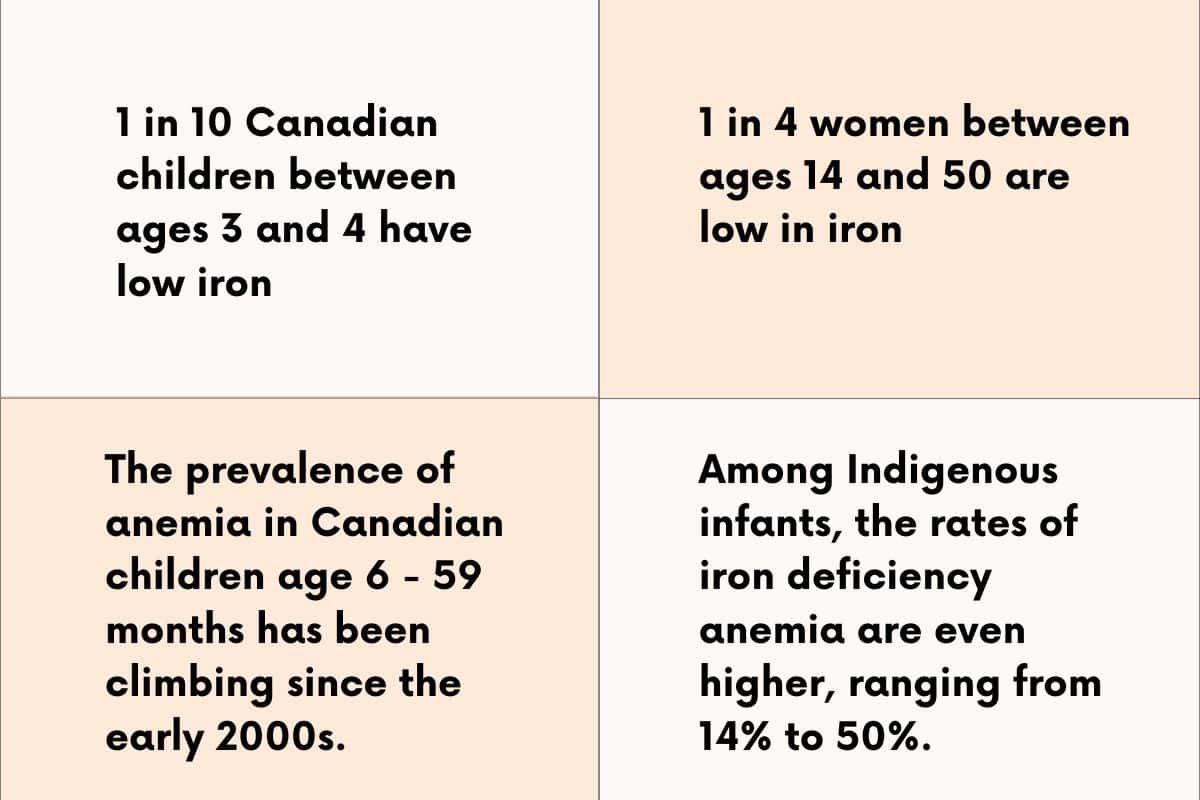
The takeaway? Iron deficiency is more common than many of us realize-especially in young children, women, and certain communities here in Canada. It's one of those nutrients where a little awareness can make a big difference for health, growth, and development.
Should I get my child tested?
If you've noticed some of the red flags we talked about earlier-or if your child falls into a higher-risk group-it's worth having a conversation with your doctor. A simple blood test can confirm whether iron levels are low and whether treatment is needed.
But testing isn't the only piece of the puzzle. Registered Dietitians are trained to do a thorough food history to really evaluate a child's dietary intake of iron. Reach out to your local Registered Dietitian for support.
How much iron is needed at every age and stage?
You might be surprised to learn this, but a seven month old baby needs more iron than an adult male!
Iron needs are higher during growth stages and to replete losses.
Here are the RDAs for iron, which cover 97 to 98% of the population:
- 7-12 months: 11mg (high growth needs!)
- 1-3 years old: 7mg (still developing, but growth rate slows down)
- 4-8 years old: 10mg (watch out for those growth spurts!)
- 9-13 years old: 8mg
Once menses begin, females require higher iron intakes to replace monthly losses.
- Females 14-18 years: 15mg
- Females 19-50: 18mg
- Pregnancy: 27mg (growing a baby requires a lot of iron! Blood volume nearly doubles in pregnancy!)
- Lactation: 9mg (before menses return)
- Females 51+: 8mg
Males only require maintenance doses once maximum height is achieved.
- Males 14-18 years: 11mg
- Males 19+: 8mg
For those following a vegetarian or vegan diet, the recommendations are 1.8x higher since the type of iron found in plant-based foods isn't absorbed as efficiently (more on that below!)
It can take months (with supplementation) to correct a deficiency. Prevention is your best friend!
What food sources of iron are the best?
Finally-we get to the fun part: the food solutions!
The exciting thing is that there are plenty of iron-containing foods to choose from, giving you lots of tools in your tool belt. And just like in any toolbox, some tools make the job quicker and easier than others.
Think of it this way:
Non-heme iron is like a manual screwdriver. It works, but you'll need more turns (or in this case, more bites) to get the job done. You'll find non-heme iron in both plant and animal foods.
Heme iron is like an electric drill. It's faster and more efficient because it's highly "bioavailable"-meaning your body absorbs and uses it much more easily. But here's the thing: heme iron is only found in flesh foods (meat, fish, seafood, and poultry).
In Canada, we use a simple system to classify how much iron a food contains:
- Excellent Source: 25% or more of the Daily Value (DV)
- Good Source: 15-24% of the DV
- Source: 5-14% of the DV
You've probably seen that % Daily Value on the Nutrition Facts panel before. But what does it really mean? It's a reference point-basically a benchmark for the "average" person. If a product is made specifically for babies or toddlers, the DV is adjusted to reflect their needs. Otherwise, it's based on a reference adult.
The key thing to know: it's not telling you exactly how much you or your child needs-it's more of a comparison tool to help you quickly see whether one food packs more iron punch than another.
Our friends at Canada Beef have created a handy chart to compare various iron-containing foods and which category they land in.
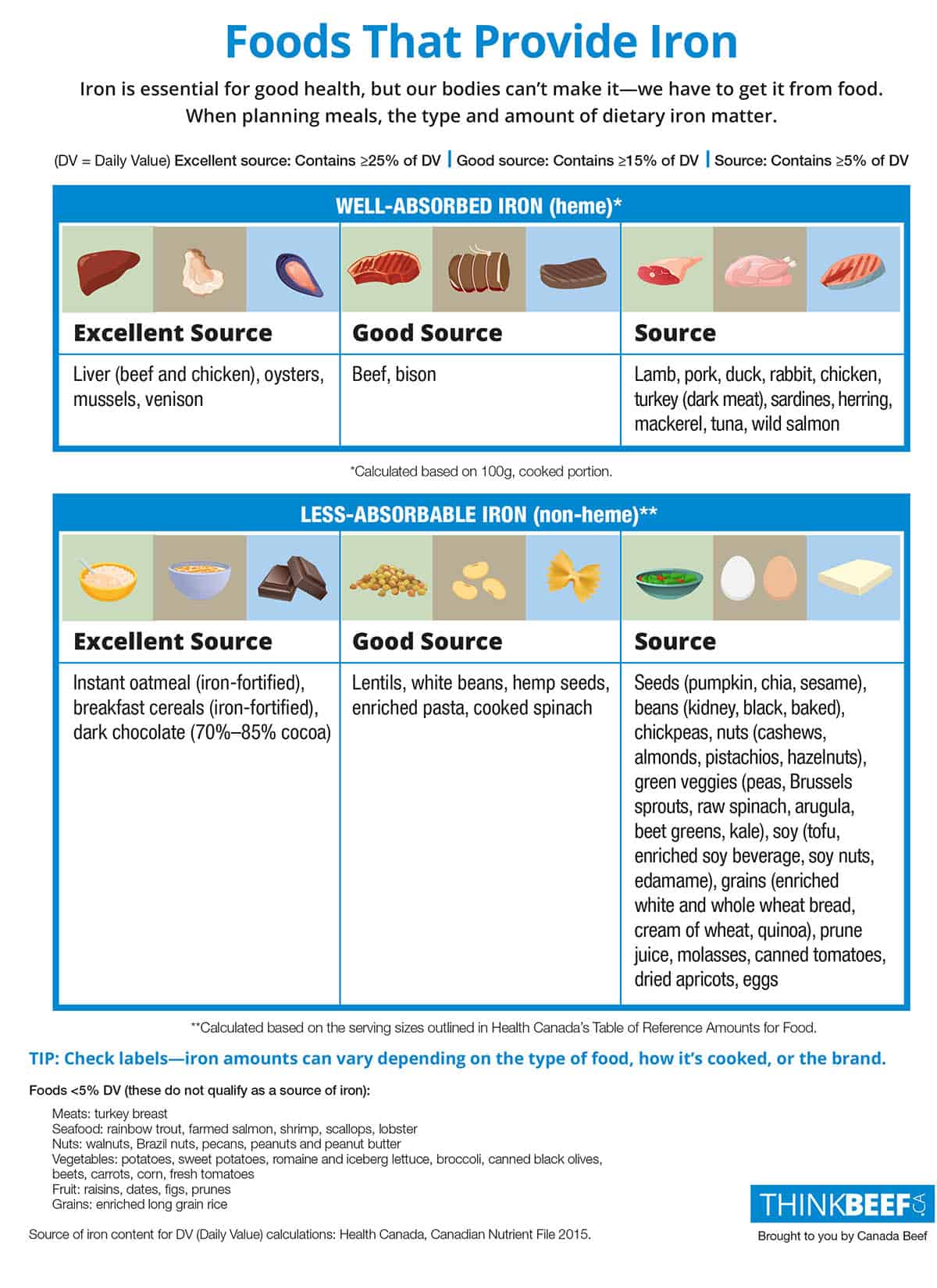
Please note that while liver is an excellent source of iron, it's also high in pre-formed Vitamin A, which can be toxic to an infant or young child if consumed frequently. As such, it should only be offered sparingly (no more than once or twice a week).
Recipes to increase iron intake
Here are some recipes we've developed that capitalise on beef as a good source of iron! All of these are baby friendly and can be adapted to serve your baby starting at six months old.
- Sofrito Beef Beans and Rice
- Sumac Beef
- Prune Burgers
- Homemade Hamburger Helper
- Moroccan Beef and Lentils
And if you're wondering how to prepare beef to the right size, shape, and texture to match your baby's stage of development, you'll definitely want to check out this tutorial that includes five ways to offer your baby beef!
And here are some vegetarian and plant-based options:
Iron plays a huge role in our kids' health, growth, and development. With the right information and some simple food strategies, iron deficiency is something we can try to prevent-and that's one less thing to worry about at mealtimes and in parenthood.
do you have any examples of how
much food from iron sources a child age 1-6 might need to eat in a day to consume the necessary amount of iron?
it's great to know which foods are high in iron but it would be helpful.to know how much of those foods a child actually needs to eat in a day to get the amount of iron they need.
Hey - we do! In the ecourses, we have a specific document on iron and how much iron is in foods based on child size portions. Lots of parents have loved the chart and keep it handy when planning meals and snacks.