How to Use Dips to Help Toddlers Try New Foods
Could a little dip help your picky eater become more adventurous with food? From ketchup with eggs to honey mustard with chicken, we'll teach you about how dips can strategically help toddlers build food acceptance. Plus, get dietitian-approved food and dip pairings to try!
This post was written as a paid collaboration with the Canadian Sugar Institute. As always, all opinions are our own.
Bite-Sized Takeaways
🍯 Use familiar flavours to increase familiarity with new foods (picky eating strategy)
🥦 Dips can help soften bitter flavours. Sweet dips and sauces can mellow the bitterness of some vegetables, and improve acceptance.
🥄 Let your toddler take the lead. Dipping, scooping, and dunking make eating playful and allows kids to practice autonomy.
⚖️ Think long term A small, portioned amount of a sweet dip can fit into a balanced diet.
SUMMARIZE AND SAVE THIS CONTENT ON:
Kids and sweet foods go together like peanut butter and jelly, milk and cookies, and Mickey & Minnie Mouse.
Instead of fighting this natural pull towards sweet foods, we'll teach you how to use it strategically by pairing sweet leaning dips with foods your child hasn't learned to love yet!
To your kids, it's just a really fun dip. To you, it's a chance to build familiarity. Let's do a deeper dive, together!
Why kids are inherently drawn to sugar
There's no single reason kids are drawn to sweetness. Several things are working together:
Sweetness is the first flavour they know. Breastmilk is naturally sweet thanks to lactose, and so are most infant formulas.nts of any or all of them are linked to an increased risk of developing certain chronic diseases .
Growing bodies want fuel. Children prefer sweeter tastes than adults do, and research suggests this preference is linked to growth. It tends to ease off as growth slows in the teen years.
Sweet is a built-in favourite. Babies are born liking sweet tastes, while bitter is a taste we have to learn to like.
Why dips can help picky eaters
Here are a few ways a dip can help your child say yes to new foods:
- It takes the edge off bitterness. Since bitterness isn't inherently a pleasant flavour for humans, we need to acclimatise our tastebuds to enjoy it. Same goes for some strong flavours (which is more individual specific). Sweet foods can suppress bitter tastes, mellowing them out and making them more palatable. If your child struggles with accepting vegetables, understanding this could be so helpful!
- It brings a friend to the party. A familiar flavour can soften the "newness" of other foods. Imagine you walk into a room full of strangers at a party. Awkward! You don't feel comfortable until you spot your bestie in the corner. Once you sidle up to your friend, you feel more confident in chatting and interacting with the unfamiliar faces. A familiar, well-loved flavour works the same way, giving your child the confidence to try something unfamiliar.
- It puts them in charge. Toddlers love having a say. With a dip, they choose how much to scoop and how often, so the food feels like their decision.
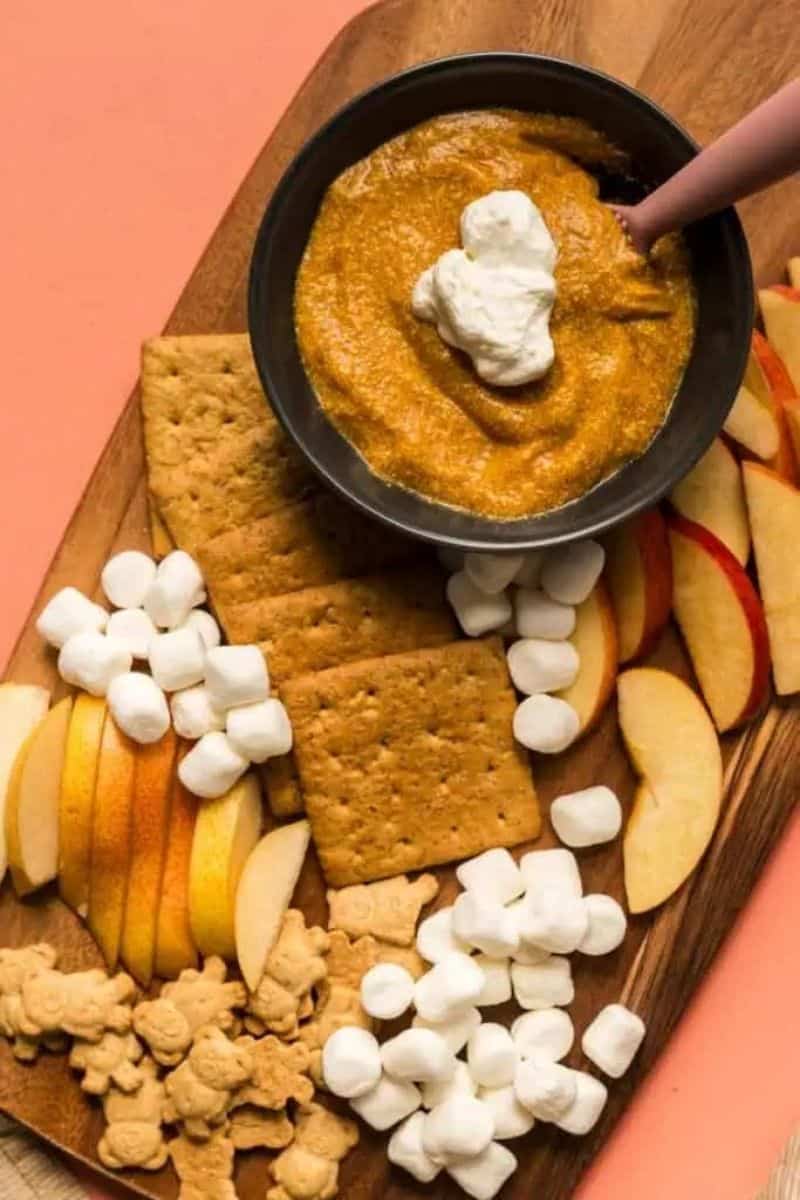
- It makes eating playful. Dunking, swiping, and scooping turn a plate of food into an activity, and that takes the pressure off mealtime. Our kids love doing that with this pumpkin pie dip!
Kids often need many (many!) exposures before accepting a new food. Dips make those exposures more pleasant and less pressured.
How to use the dip strategy to help your child learn to like foods?
There's no single "right" way to use this, but here are some dietitian and mom-tested tips!
- Mix it up. Rotate which dip you offer. Instead of offering ketchup each time, try honey mustard or sweet and sour sauce.
- Start dip-free. Serve the new food on its own first. If your child hesitates, that's your cue to bring in the backup: "Want to try dunking your chicken in ketchup?" Offering it as an option keeps things light and puts your child in the driver's seat.
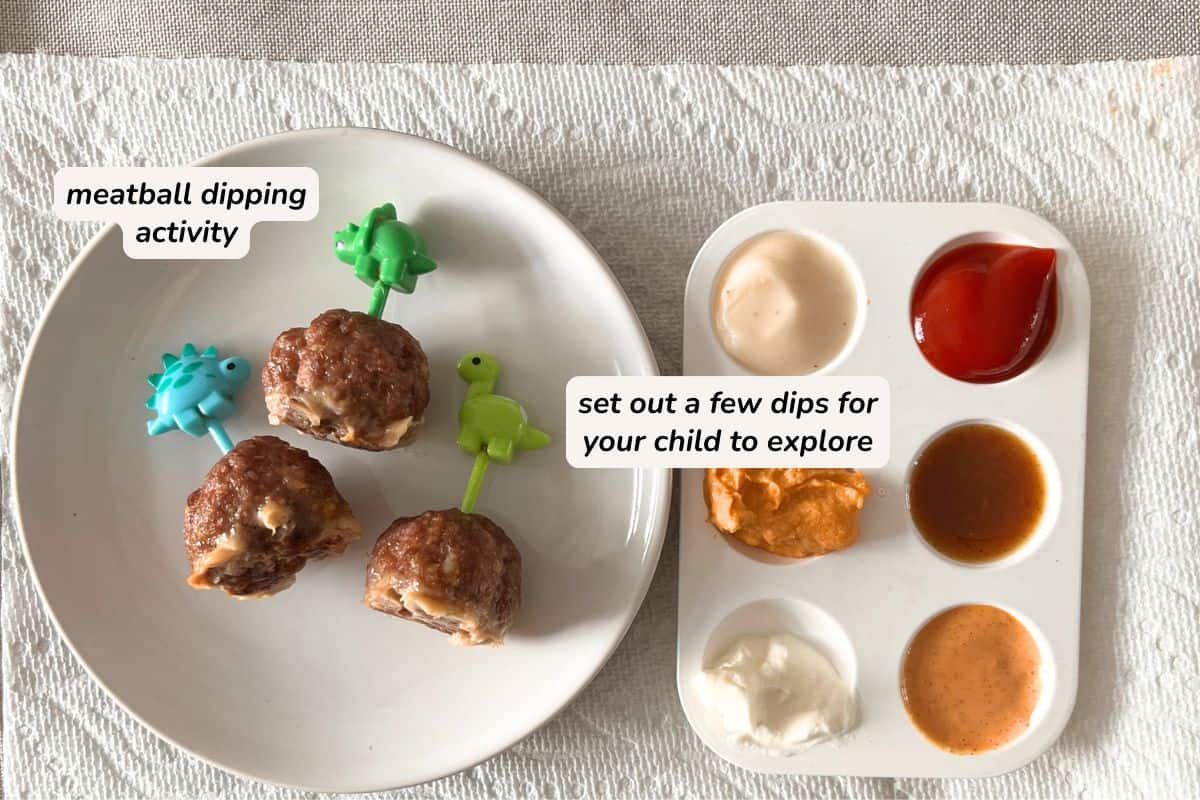
- Portion it out. Keep a stash of small ramekins handy and fill one with a reasonable amount of dip. When it's gone, it's gone. This keeps your child from filling up on dip alone, so there's still room for the main food. A limited portion is the same strategy we recommend when it comes to other sweet foods, such as dessert.
What if they only eat the dip?
Take a breath, because that's okay! With a small, set portion, the dip can't take over the meal. Keep the vibe relaxed and keep offering the food. Every exposure counts, even the ones that end with an empty ramekin.
"Isn't this just teaching them to eat more sugar?"
It's a fair question, and we've asked it ourselves. As moms, we worried that a sweet dip would become a crutch our kids couldn't eat without.
With more experience, we've come to see it differently: a dip is a bridge, not a destination. It helps your child get from "no way" to "okay, I'll try it."
Here's why we think that's worth it. A food only nourishes your child if it actually gets eaten. If the eggs are rejected every time, your child isn't getting the protein, choline, and other nutrients in them, and they'll fill up on something else instead. But if a little ketchup is what gets those eggs eaten, your child gets the benefits of the eggs.
So while it may seem counterintuitive, a small amount of sugar can help make a diet more balanced, not less.
And keep the big picture in mind: a small, portioned dip adds only a little sugar to your child's whole day. That's why looking at sugar from an "over all" picture is so helpful!
Food and dip pairings kids love
Want some ideas for ways you can employ this strategy? Here are some delicious combinations:
- Ketchup with scrambled eggs
- Honey mustard with chicken
- BBQ sauce mixed with apricot jam with meatballs
- Sweet and sour sauce with pork chops
- Peanut butter with rice (Jessica's kids favourite!)
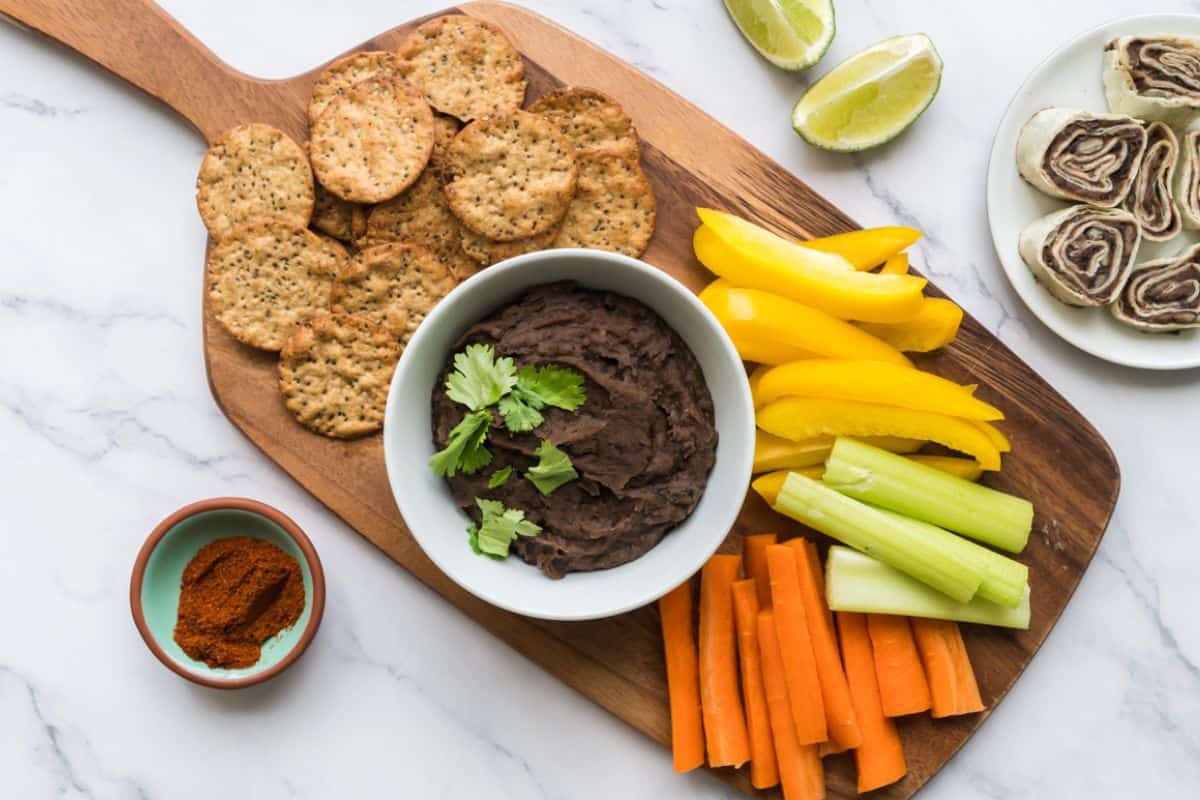
- Pumpkin pie pudding dip with fruit
While we've been talking about how sugar can soften stronger flavours, the dips don't have to always be sweet. Try these savoury combos:
- Cashew korma with roasted cauliflower
- Ranch with carrot sticks
- Tzatziki with steak strips
- Edamame dip with radish slices
- Cheese sauce on steamed broccoli
- Marinara sauce with quesadillas
- Mild salsa (or hot, if your kid enjoys spice!) with fish
Common pitfalls to avoid
When using dips as a bridging tool to help your child expand their palate, here are a few mistakes to avoid making:
- Don't start this too young. It's not recommended for children under two to have foods with added sugar. Babies typically have a window of acceptance where they'll eat a wide variety of food. Then in toddlerhood, they will often start to become more selective with their food choices.
- Don't drown the food. If the broccoli is swimming in sauce, your child can't tell what they're eating. Serve a small portion of dip in a little ramekin or cup and let your child do the dunking.
- Don't turn the dip into a prize. "Eat your chicken, then you can have the ketchup" teaches kids that the chicken is a chore and the dip is the reward. That's the opposite of what we want! Our goal is to inspire a love of eating that lasts into adulthood.
- Don't pressure, pry, or plead. You've done the hard part: you made the food and added a fun dip. Now take a breath, sit back, and enjoy your own meal. Pressure usually makes kids dig in their heels, and the more you push, the harder they resist.
Putting it all into practice
Here's your challenge (if you choose to accept it). Make a specific plan to put his strategy into action!
- Pick one food your child resists
- Choose one familiar dip
- Offer the combo three times this week to increase familiarity
Keep it relaxed and keep it consistent, because repeated, pressure-free exposure is what builds acceptance, in your child's own time.