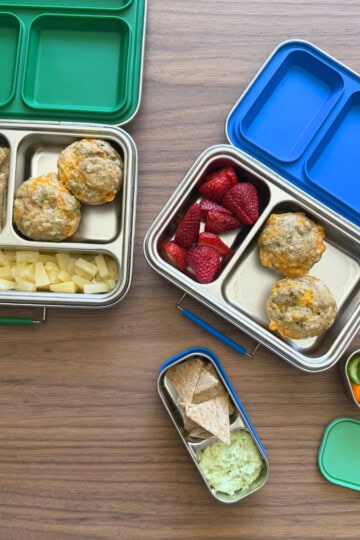
We're Dietitian Moms - 5 tips to make packing lunches easy
This blog post is brought to you in partnership with our friends at Canada Beef and their Think Beef program. As always, all opinions are our own.
Instead of dreading the task, discover tips that will make the job of packing lunches easier and of course, healthy for your child.

This post may contain affiliate links.
Bite-Sized Takeaways
🛏️ Pack lunches the night before: Save time in the morning by prepping lunch while you're already making dinner.
🌱 Use a simple lunch formula including protein, produce, fibre and healthy fats.
🧑🧒🧒 Get kids involved, let children choose between a few options, help with the grocery list and gradually take on more lunch packing responsibility.
⏰ Keep lunches interesting, rotating favourite foods and change up the presentation
🍏 Planning, freezer prep and repetition can make lunches feel more manageable.
SUMMARIZE AND SAVE THIS CONTENT ON:
Right up there with "how did the ancient Egyptians build the pyramids?" and "does anyone actually understand how gravity works?" is this great mystery:
Why is packing lunches such a universally dreaded task?!
- Put food in lunchbox
- Send lunchbox to school
- Child eats food
- Lunchbox comes home
- Repeat
On paper, it sounds absurdly simple:
And yet... that's not how it goes, is it?
Instead, it's more like:
- Mornings are already pure chaos, and now lunch has to be dealt with too
- You spend time assembling a balanced, nutritious meal
- Your child brings the lunch home completely untouched
- You scroll past one too many bento box masterpieces and start to feel like you're failing
It's no wonder lunch packing feels like a daily test you didn't study for.
But here's the good news: after several years and thousands of school lunches packed, we've figured out some simple systems that actually make the whole thing more bearable - maybe even (dare we say it?) kind of satisfying.
No glittery toothpick flags or sculpted kiwi flowers required. Just practical, real-life tips that work.
While we can't promise you'll love lunch packing by the end of this, we can help make it feel like just another part of your routine - not the Everest of your morning.
Let's dig in.
Tip #1: Pack Lunches in the Evening
This one's simple, but it makes a big difference:
Pack lunches the night before.
Instead of scrambling to throw something together during the morning rush, get it done while you're already in the kitchen - either during dinner prep or while cleaning up.
Think of it as doubling up on your kitchen time:
-
- Got the cutting board out to prep dinner? Slice some extra veggies for lunch.
-
- Cooking pasta? Set aside a portion before adding sauce and turn it into a pasta salad for tomorrow.
-
- Leftover roast beef? Boom - instant sandwich filling.
Once you get into this habit, you'll wonder why you didn't start doing this ages ago.
Tip #2: Follow a Formula
When you're faced with all the food options available to use nowadays, it can be overwhelming for our brains to narrow down and choose something. Which is why a lunch formula can be helpful! It also allows you to ensure you're packing a nutritionally balanced lunch.
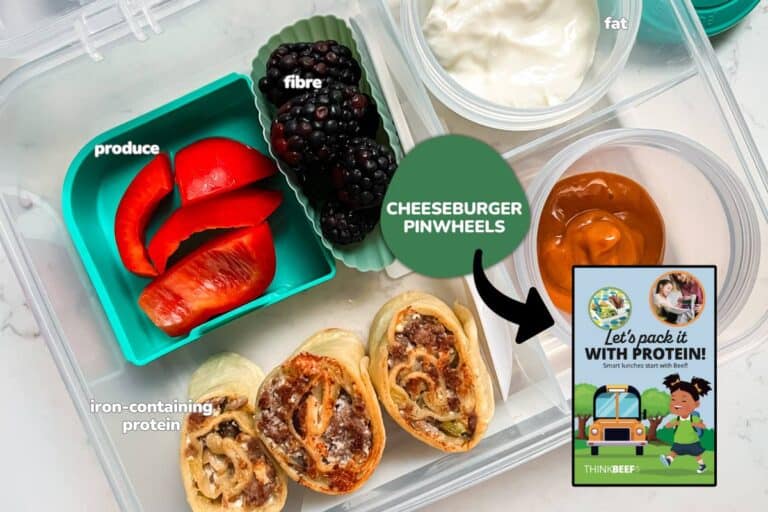
Simply make sure lunches check off each of these boxes. Sometimes one food may check off more than one box.
Protein
Both plant and animal proteins play a role in growing healthy kids. While dairy products like cheese and yogurt offer up calcium, and legumes such as lentils or chickpeas are fibre powerhouses, animal proteins provide iron and zinc. Iron deficiency impacts 1 in 10 children affecting energy levels, mood, appetite, and learning. As they say - variety is the spice of life! Offering a variety of plant and animal proteins ensures your child gets the nutrients they need.
For more on the importance of protein foods in packed lunches, our friends at Canada Beef have created a booklet for you to download! In addition to valuable nutrition information, you'll find several lunchbox friendly recipes!
Produce
Did you know? Fruits and veggies are the only foods that contain Vitamin C!
-
- Keep a box of pre-cut raw veggies in the fridge to make it easier to grab and pack.
-
- Fruit cups and pouches make checking that 'fruit box' easy.
-
- Dried fruit is nice to keep on hand when you run out of fresh options.
Fibre
Not only does fibre help to keep things moving when it comes to digestion, it also keeps us feeling fuller for longer. That way your child can concentrate at school without hunger pains coming back before the bell rings. You'll find fibre in whole grains, legumes, seeds, and fruit.
Fat
Children need fat in order to grow healthy brains. As a bonus, fat is another nutrient that keeps us feeling fuller for longer. You'll find fat in dips for veggies, butter or mayo on a sandwich, and in whole foods such as yogurt, cheese, avocado, fish, egg yolks, meat, and seeds.
Pro Tip: Make a "Greatest Hits" list of foods your kids already know and love.
For example, Jess has a list of go-to sandwich fillings taped inside her cupboard-aka her lunchtime lifesaver. When it's time to pack or prep, she just peeks at the list, picks something, and voilà… instant variety without the brain strain.
Tip #3: Friend Your Freezer
Your freezer is more than just a place for forgotten leftovers - it can also be your secret lifesaver for stress-free lunch packing.
When you work smarter (not harder) and stock it with ready-to-go options, you can skip the "what on earth am I going to pack today?" panic entirely.
Think of it as your lunch "help":
-
- Mini lasagna cups - Portion and freeze in muffin tins for single-serve, reheat-and-pack convenience-find the recipe in this free booklet.
-
- Slices of chicken or roast beef - Freeze in small portions, then thaw overnight for instant sandwiches or wraps.
-
- Muffins - for low added sugar options, try our Banana Carrot Zucchini Muffins or Double Chocolate Mini Muffins
-
- Cooked ground beef - Season simply, then freeze flat in freezer bags; it's ready to sprinkle into pasta, quesadillas, over rice or with ramen noodles.
-
- Meat buns - The ultimate grab-and-go option. They thaw beautifully in a lunchbox by noon.
-
- Muffin tin pizza rolls - Customize these pizza rolls with your toddler's favourite toppings!
Pro tip: Keep a "freezer inventory" taped to the door so you know exactly what's in there!
Your future self will thank you when all you have to do is open the freezer, grab, and go.
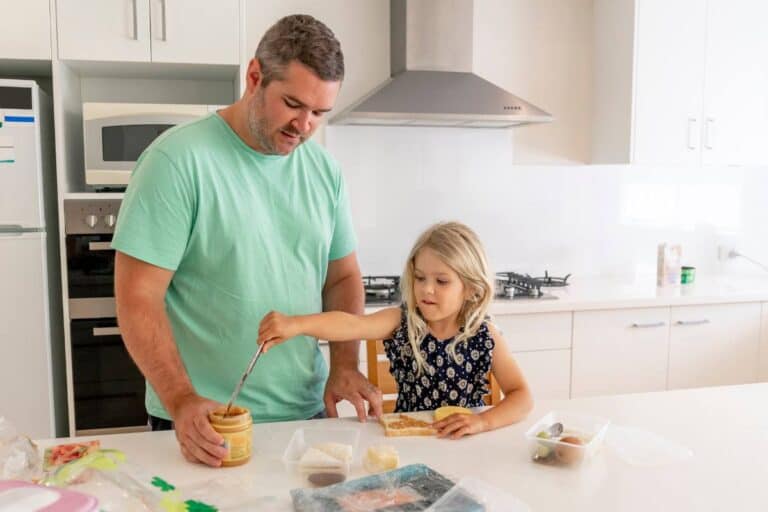
Tip #4 Get the Kids Involved
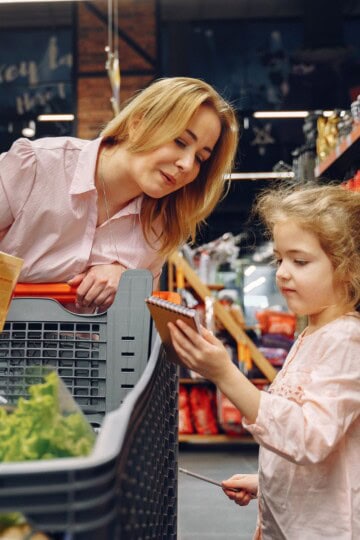
If your kids are part of the process, they're a lot more likely to actually eat what's in their lunchbox - and you're teaching them skills they'll use for life. It's a win-win.
Younger kids will need more help at first, but as they get older, they can take over more of the decision-making (and eventually, the packing).
Here's how to make it work without adding more chaos:
-
- Teach them the lunch formula
Let them choose from what's already in the house with close-ended questions.
"For produce today, would you like cherry tomatoes or cucumber slices?"
This gives them the power of choice!
- Teach them the lunch formula
-
- Get them in on the grocery list
"Should we grab beef jerky or some sliced roast beef for this week?"
Kids are much more likely to eat something they picked out themselves.
- Get them in on the grocery list
-
- Plan freezer-friendly favourites together
"Should we make lasagna cups or meat buns this weekend together?"
Remember what we talked about in Tip #3, befriend your freezer/
- Plan freezer-friendly favourites together
The earlier you involve them packing lunches (or maybe start small with snacks), the quicker they'll gain confidence - and the sooner you can hand over the lunch-packing reins entirely.
Tip #5 Play it Safe
School lunches may not be the best time to offer typically rejected foods. I (Nita) have packed thousands of lunches and I learned this one the hard way. I had sent broccoli one day, innocently assuming that maybe my child would be motivated to try it because other classmates would likely bring it to school. I figured there might be some positive peer pressure…
It backfired.
He came home in tears asking "Why did you do that! You know I don't like broccoli, don't ever do that again". Cue, the mom-guilt.
But it was a good lesson for me: play it safe.
While it's important to expose kids to new foods at home, the lunchbox is where you want to stick with the "Greatest Hits". Why? Because kids who eat foods they enjoy are more likely to get the nourishment they need to fuel a full day of learning, play, and growth.
Mind if we get a little sentimental? The foods we send are also a reminder they're cared for and understood.
That doesn't mean lunches have to be boring. Rotate through their favorites, mix and match the sides, and change up the presentation (cut sandwiches into halves instead of quarters, swap wraps for pita pockets, etc.).
Save the rejected foods and brand-new recipes for after-school snacks or dinner at home, when your child can explore with your support.
Let's Pack It Up
Packing school lunches might never be the highlight of your day… but it also doesn't have to be the daily dread it's made out to be. With a few smart systems, a freezer full of ready-to-go favourites, and some fresh ideas to test, you can turn the process into something manageable-maybe even a little satisfying.
Before you know it, lunch packing will feel less like scaling Mount Everest and more like a quick, everyday step in your routine .