6 Ways to Prevent Picky Eating Before Toddlerhood
Want to prevent picky eating before it starts? We're Registered Dietitians and moms--here are 6 evidence-based strategies you can use when starting solids to help your baby build a positive relationship with food and raise adventurous eaters.

This post may contain affiliate links.
Bite-Sized Takeaways
🧱 BLW isn't guaranteed to prevent picky eating
🔥 Texture progression is important, parents need to gradually challenge their baby with textures as they introduce solids
🥣 There is a "window of opportunity" for texture progression that we don't want to miss!
‼️ Parental worry and anxiety about feeding can worsen the feeding the relationship
🧴 Some things are in your control as parents, focus on that!
SUMMARIZE AND SAVE THIS CONTENT ON:
When it comes to starting solids it's clear that how it's done can impact a child's future eating habits in a big way.
A lot of proponents of baby led weaning (BLW) will cite decreased picky eating as one of the method's benefits. We've talked to many parents who have stressed over using a strict BLW approach solely for this reason. Who wants a picky eater?
While offering handheld foods BLW style does have many benefits, research shows the BLW method doesn't seem to reduce picky eating.
And our experience in interacting with parents every day on Instagram agrees - parents come to us frustrated because they thought BLW was going to be a magical inoculation for preventing picky eating.
Even though BLW may not reduce the risk of picky eating, there are plenty of things you can do when starting solids that may help. We're sharing 6 ways to help prevent picky eating before toddlerhood.
Before we dive in, if you're bummed BLW isn't the magic fix for picky eating, here's the upside: now you can choose the feeding approach that works best for your baby and family - without the pressure that anything other than BLW will cause picky eating. Purées? Great. Mixed approach? Awesome. No matter how you start solids, you can still help prevent picky eating with the 6 tips we're sharing today.
Let's get to it!
Jump to:
- Bite-Sized Takeaways
- Picky Eating Prevention Tip #1: Introduce lumpy foods no later than 9 months
- Picky Eating Prevention Tip #2: Eat alongside your baby
- Picky Eating Prevention Tip #3: Serve fresh fruit
- Picky Eating Prevention Tip #4: Limit ready-prepared food
- Picky Eating Prevention Tip #5: Avoid introducing sugary and salty foods (when possible)
- Picky Eating Prevention Tip #6: Don't worry when toddler is choosy
- Now what?
Picky Eating Prevention Tip #1: Introduce lumpy foods no later than 9 months
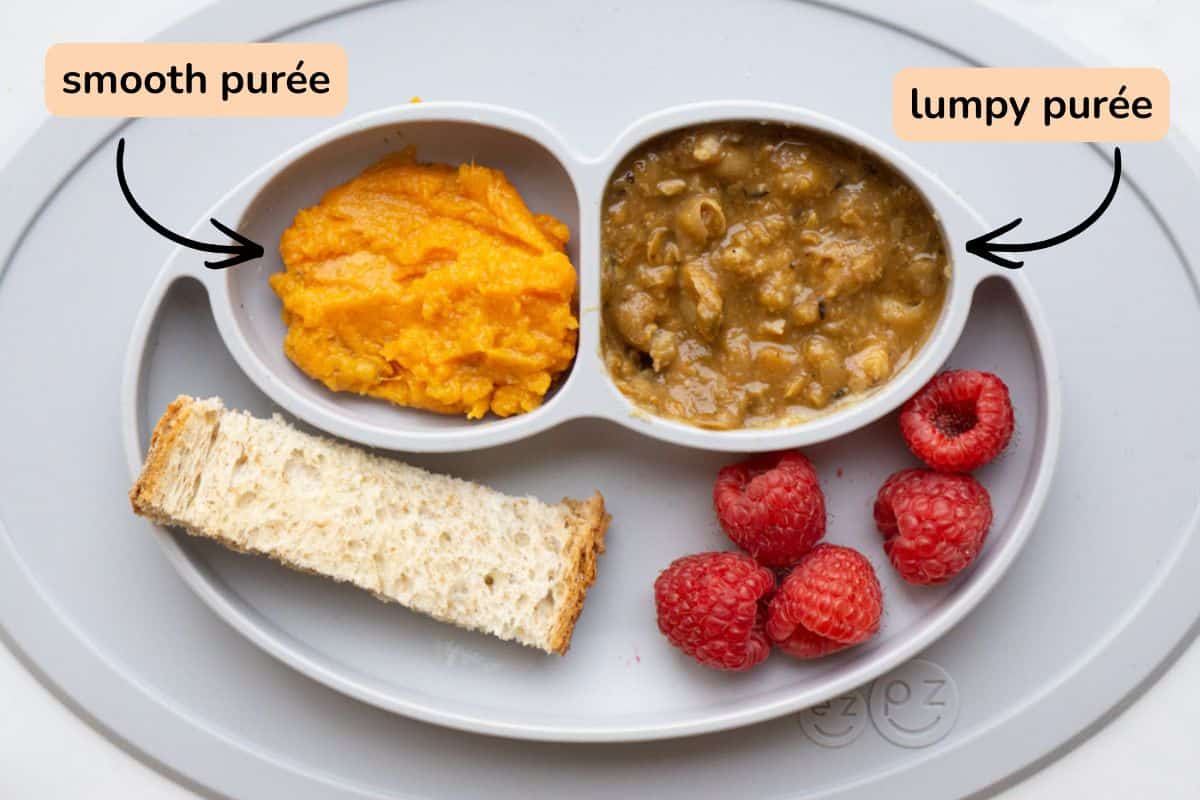
Offering your baby lumpy textures at 6 months of age and no later than 9 months of age may be key in preventing picky eating.
We often say starting solids is about mastery, not coasting - meaning once your child masters one texture (i.e. smooth purées), you move to the next step (i.e. minced or mashed).
Whether you're stuck on purées, nervous about textures, or not sure what to offer next then you're in good company. Our viral recipe for chia berry compote is a great texture, along with this baby friendly daal recipe, this baby banana custard and everyone's favorite one pot meal for sofrito beef beans and rice.
- Our Start Solids Confidently e-course guides you through every stage of texture progression and tackles common feeding fears like choking and gagging.
- Our ebook Whole Food Recipes for Your Baby (only $12 USD) includes recipes that are delicious, nutritious, and fit the "lumpy" bill perfectly. Don't miss the fan favorites coconut chia seed pudding and coconut lentil curry!
Picky Eating Prevention Tip #2: Eat alongside your baby
We can't overstate the power of eating with your child. After all, feeding is an attachment ritual and your baby adores you. They learn new skills by watching the people they love around them, and the skill of eating (including trying new foods) is no exception. Research - and our own experience - provides evidence that eating the same meal with your child can protect against picky eating later in life.
Of course, serving the same meal to everyone can feel easier said than done. That's why we created One Family, One Dinner - a free mini cookbook with seven family-friendly dinners, plus purée and BLW options for every recipe. Get your copy!
Picky Eating Prevention Tip #3: Serve fresh fruit
This one may sound too good to be true, but offering fresh foods - especially fruit - when starting solids may help reduce the risk of picky eating later on.
We love fruit because many options require very little prep to serve safely to babies. Even better, many fruits are rich in vitamin C, which helps the body absorb iron, an important nutrient for growing little ones.
That said, some fruits (we're looking at you, apples!) can be a choking risk if not prepared properly. That's why our Start Solids Confidently e-course includes a complete guide to serving fruit safely at every stage.
Picky Eating Prevention Tip #4: Limit ready-prepared food
We're not saying to avoid packaged snacks entirely - that's not realistic or helpful. But, limiting ready-prepared food may be another way to help reduce picky eating.
To make that easier, check out our 10 Baby Snacks made from whole foods you can prep at home. These were our go-to's during starting solids with our own kids and made it much easier to keep things whole and unpackaged.
Our blog also includes baby-friendly recipes like homemade teething biscuits and coconut banana muffins - perfect nutritious, on-the-go options to help you rely less on store-bought snacks, even when you're out.
Picky Eating Prevention Tip #5: Avoid introducing sugary and salty foods (when possible)
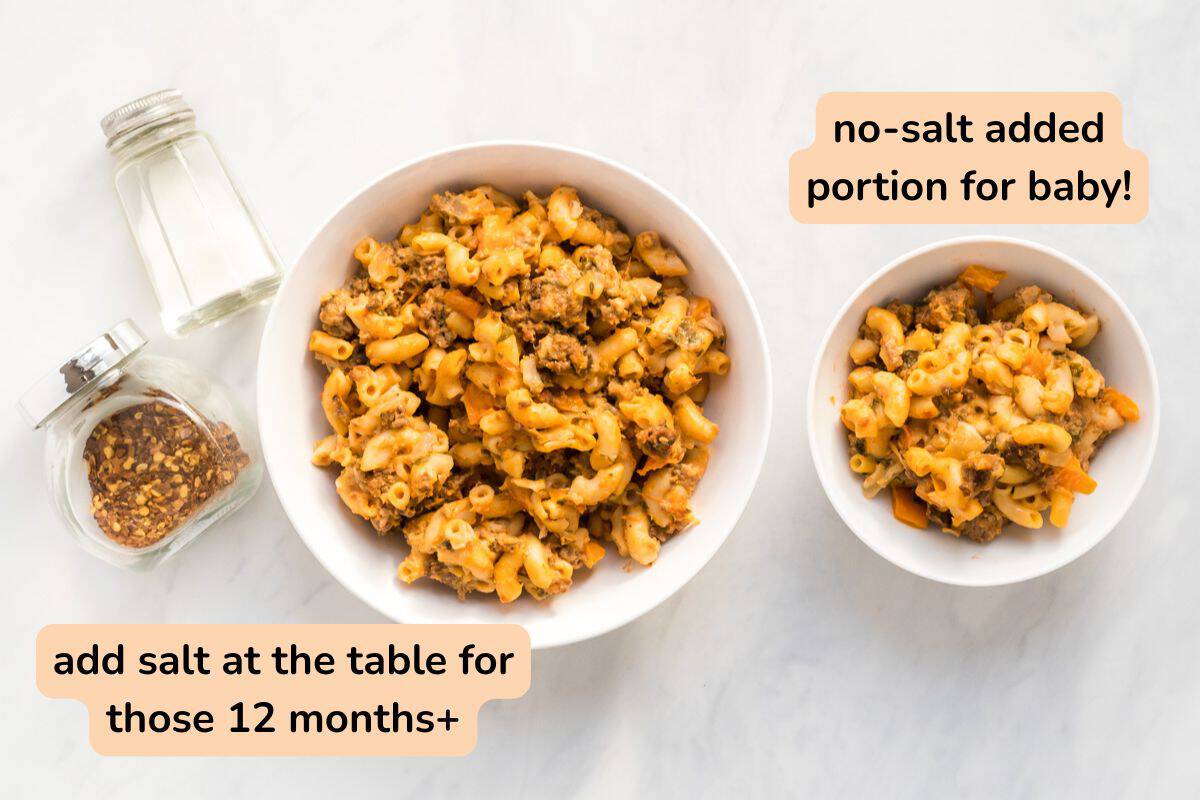
Research suggests that limiting exposure to foods high in sugary or salt until age 2 may support better diet quality later, including higher fruit and vegetable intake.
Sugary and salty foods are easy to learn to like. Veggies are harder to learn to like. A child under two is living in a window of opportunity that primes their taste preferences for later on in life. By limiting foods high in sugar and salt, you up your chances that your future child will accept more fruits and vegetables!
Thankfully, Health Canada recently made it easier to spot foods higher in sugar and salt with mandatory front of package labels.
How strictly this is followed will vary from family to family and even child to child. We found it easier to follow formal guidelines with our first babies than with our subsequent babes. Nutrition isn't so black and white; understand the nuances of sugar recommendations for babies in the context of feeding a family!,
Similar to sugar, it's important to be mindful of very salty foods, especially for babies because the guidelines on salt intake are really to limit it. Partly to protect their developing kidneys, and partly to help shape their taste preferences.
Perfection here may not be the goal with every child, but the science is clear that limitingg foods with added sugar and/or high in salt may support their long-term healthy eating habits. Food for thought!
And again, if this is confusing for you and you live in Canada, use the front of package labels to support you.
Picky Eating Prevention Tip #6: Don't worry when toddler is choosy
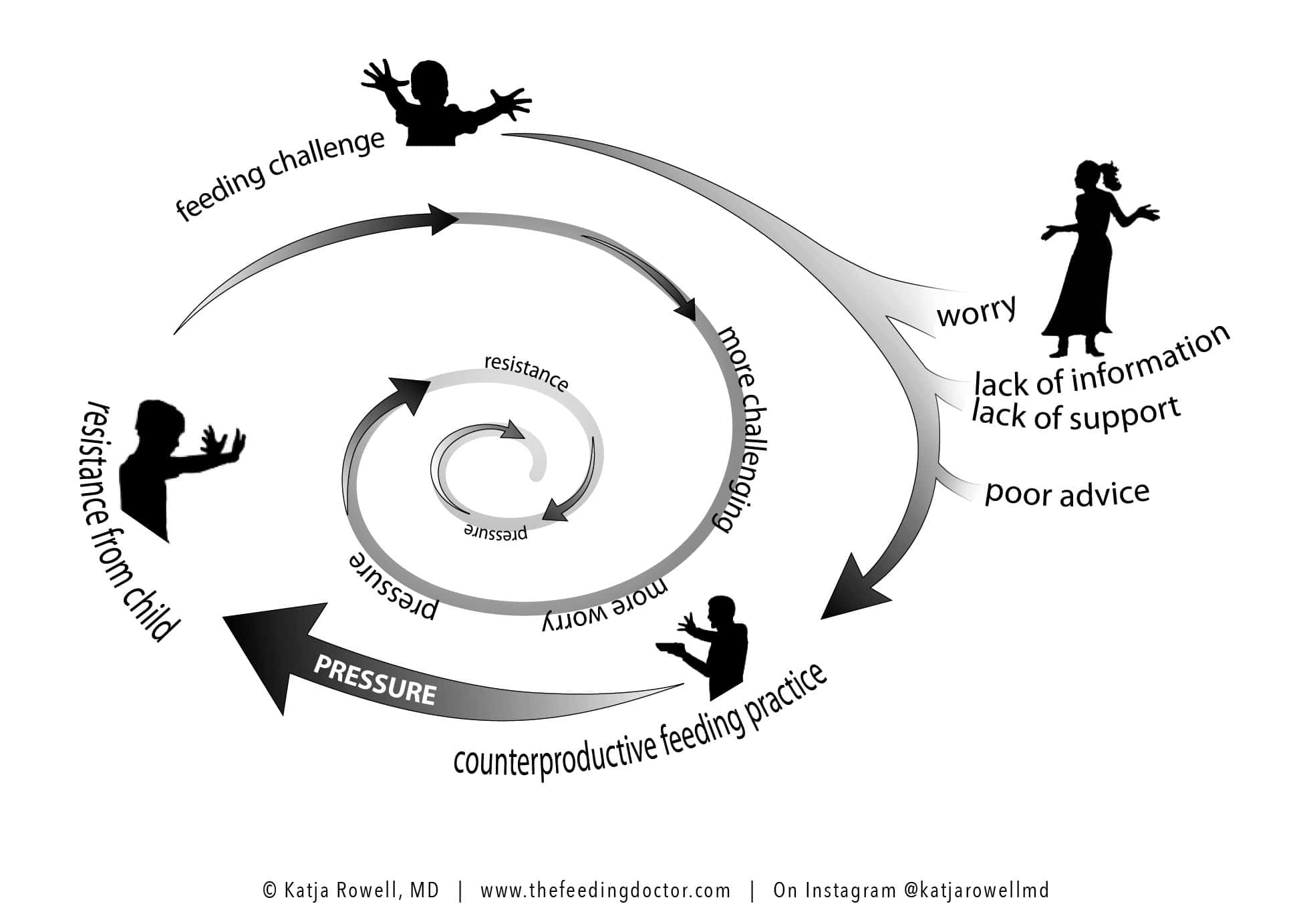
When your baby or toddler is 'choosy' or 'fussy' with food, worry can be a natural reaction. We get it and know it comes from a place of love and concern. The thing is, having a parent who is worried about their "fussy" eater may actually worsen a child's picky eating itself.
One reason for this is a worried parent often has an anxious presence, and, may unintentionally apply more pressure around eating. The more pressure a child feels, the less likely they are to do what you want them to do (which is to eat). And so, the "worry cycle" begins as seen below.
We don't want to downplay the anxiety you experience from feeding your children. It can become overpowering and debilitating. If you are in this position first and foremost we want to give you a hug! It's a lot! Second, we want to help.
One of the most impactful things you can do to combat anxieties around feeding your children is to LEARN. Knowledge is power and can be transformational for a parent's experience feeding their little ones. This is why we are so passionate about teaching and empowering parents on the science and art of feeding their kids.
Learning what's normal and what's not (hint - almost all kids will show a degree of fussiness around food), how to create a pressure-free feeding environment, and how to prepare developmentally safe foods are all things we teach parents in our 5-star ecourses Start Solids Confidently and Feeding Toddlers Confidently. Notice a similarity in how we named our e-courses? Our main goal is to empower you to feed your littles from a position of confidence, not fear.
Now what?
If you're reading this and are thinking to yourself "but I did all these things and my toddler is still a picky eater!" Yup, this can happen. You can do all the "right things" and still end up with a kid who's not so adventurous!
Sometimes this boils down to personality, which can show up fiercely when we're feeding our babies! Some people are naturally wired to be more cautious and hesitant about new experiences.
Additionally, it's completely normal for toddlers to go through more selective eating phases (for five reasons why, you'll want to check out this article!).
Picky eating isn't a parenting fail. It's incredibly common, and most kids do grow out of it with time and a low-pressure feeding environment. Keep showing up at the table, keep offering, and give yourself some credit; you're doing more than you think!